
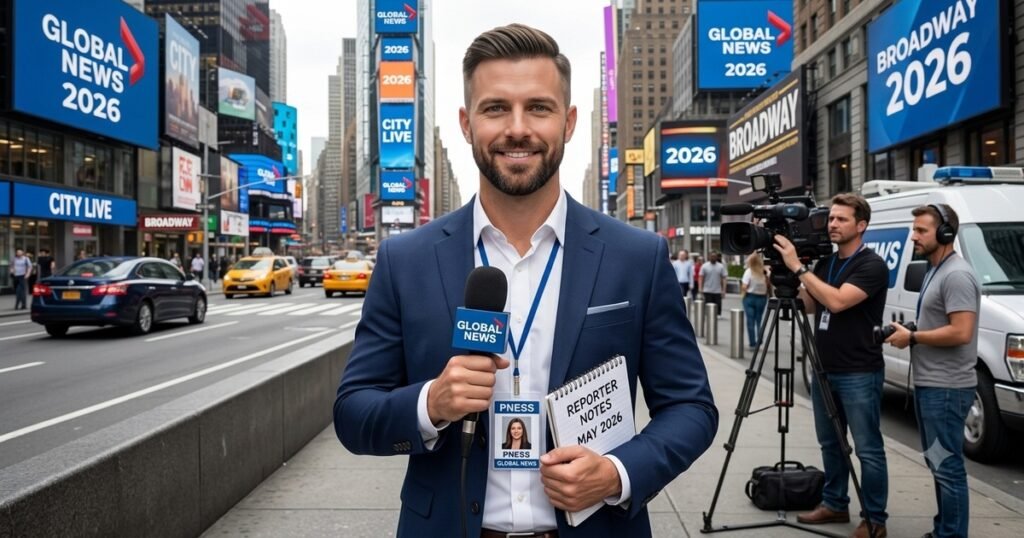
Introduction
How to become a news reporter? This is one of the most asked career questions in 2026. Furthermore, millions of people dream of telling important stories and informing the public. News reporting is a career that combines writing, investigation, and communication all in one. Moreover, in 2026, the journalism world is changing fast. New skills are needed. New platforms are emerging. In this complete guide, we explain exactly how to become a news reporter step by step. So let us get started right now!
How to Become a News Reporter: What Does a News Reporter Do?
How to Become a News Reporter — Daily Job Duties
Before learning how to become a news reporter, it is important to understand what the job actually involves. Furthermore, a news reporter gathers facts from many places every day. They speak with people to hear their stories directly. Moreover, they write clear articles or record video segments for their audience. Here are the most common daily duties of a news reporter:
- Researching and verifying facts for stories
- Developing relationships with experts and contacts
- Interviewing people who have information about a story
- Writing articles or scripts for newspapers, websites, or broadcasts
- Updating stories as new information becomes available
- Pitching new story ideas to editors and news directors
- Reviewing stories for accuracy, style, and grammar
Furthermore, news reporters often work under very tight deadlines. As a result, strong time management skills are just as important as writing ability.
How to Become a News Reporter — Types of News Reporters
There are several different types of news reporters. Furthermore, understanding each type helps you choose the right path for your career.
| Type | Where They Work | Main Focus |
|---|---|---|
| Print Reporter | Newspapers and magazines | Written articles and features |
| Broadcast Reporter | TV and radio stations | Scripts and live reports |
| Digital Reporter | News websites and apps | Online articles and social media |
| Investigative Reporter | Any major outlet | In-depth investigations |
| Freelance Reporter | Self-employed | Multiple outlets and topics |
| Photojournalist | Any media outlet | Photos and visual stories |
Moreover, in 2026, most reporters work across multiple platforms. As a result, being comfortable with digital tools, video, and social media is more important than ever before.
How to Become a News Reporter: Step by Step Guide
How to Become a News Reporter — Step 1: Start Building Skills Early
The first step to becoming a news reporter is to start building key skills as early as possible. Furthermore, you do not have to wait until college to begin your journalism journey. Here is what you can do right now:
- Join your school newspaper or media club
- Start a blog or YouTube channel to practice storytelling
- Read news every day from multiple trusted sources
- Take writing and public speaking classes
- Watch how professional reporters conduct interviews
Moreover, the Bureau of Labor Statistics lists communication skills, interpersonal skills, persistence, and technical proficiency as the most important qualities for news reporters. As a result, developing these skills early gives you a significant head start.
How to Become a News Reporter — Step 2: Earn a Bachelor’s Degree
A bachelor’s degree is the most important educational step in how to become a news reporter. Furthermore, according to job data, a bachelor’s degree was required for 53% of news reporter positions in 2026. Moreover, employers specifically look for degrees in these fields:
- Journalism — the most common and recommended choice
- Broadcast Journalism — best for TV and radio careers
- Communications — very widely accepted
- English — strong writing foundation
- Mass Communications — covers all media types
- Political Science — great for political reporters
Furthermore, while studying, make sure to take elective courses in public speaking, debate, media law, and creative writing. As a result, these courses add enormous value to your journalism degree.
How to Become a News Reporter — Step 3: Get Practical Experience
Experience is just as important as education when learning how to become a news reporter. Furthermore, the Bureau of Labor Statistics stresses that practical experience often decides who gets hired. Here are the best ways to build experience:
School Media — Join your college newspaper, radio station, or TV channel. Furthermore, this gives you real experience and real content for your portfolio. As a result, it is the easiest first step toward professional journalism.
Internships — Apply for internships at local news stations, newspapers, and online outlets. Furthermore, in 2026, online and remote internships have become very common. They fit busy student schedules well. Moreover, try to complete two or three internships over time. As a result, each internship adds valuable experience to your resume.
Freelance Writing — Write for local blogs, community newspapers, or online news platforms. Furthermore, this helps you build a portfolio of published work. As a result, future employers can see your writing ability and range.
How to Become a News Reporter — Step 4: Build Your Portfolio
A strong portfolio is essential when you are learning how to become a news reporter. Furthermore, employers want proof of your talent before they hire you. Here is what your portfolio should include:
- Your best published news articles
- Feature stories showing depth and versatility
- Investigative pieces if you have them
- For TV or radio — a demo reel of your best broadcasts
- Photos or multimedia content if applicable
- Links to your published online work
Moreover, put everything on a clean personal website. Furthermore, a well-organized online portfolio makes a very strong first impression on hiring editors. As a result, investing time in your portfolio pays off enormously when job hunting.
How to Become a News Reporter: Essential Skills in 2026
How to Become a News Reporter — Top Skills Employers Want
In 2026, news reporters need a specific set of skills to succeed. Furthermore, based on analysis of 13,905 actual job postings for news reporters, here are the most sought-after skills:
| Skill | % of Job Postings Requesting It |
|---|---|
| Journalism expertise | 57% |
| Social media skills | 48% |
| News story writing | 45% |
| Storytelling ability | 42% |
| AP Stylebook knowledge | 38% |
| Content creation | 35% |
| Video production | 32% |
| Data journalism | 28% |
Furthermore, writing was the single most desired skill found in all news reporter job postings. Moreover, communication, editing, research, self-motivation, and ability to meet deadlines were also highly valued. As a result, developing a broad range of both writing and digital skills is essential in 2026.
How to Become a News Reporter — Digital Skills Matter More Than Ever
In 2026, digital skills are no longer optional for news reporters. Furthermore, most news organizations now expect reporters to be able to:
- Shoot and edit video for social media
- Write for digital platforms with SEO in mind
- Manage social media accounts professionally
- Use data and statistics to support stories
- Produce podcasts and audio content
- Work with AI tools for research and production
Moreover, reporters who master these digital skills have a significant advantage in the job market. As a result, building your digital toolkit alongside your traditional journalism skills is absolutely essential in 2026.
How to Become a News Reporter — Soft Skills That Make the Difference
Technical skills are important. However, soft skills often make the real difference between a good reporter and a great one. Furthermore, here are the soft skills every news reporter needs:
Curiosity — Natural curiosity helps reporters stay focused and uncover all the facts about a story. Furthermore, the best reporters always want to know more. As a result, curiosity drives better and more thorough journalism.
Confidence — News reporters often work alone to gather facts. Furthermore, they must rely on their own skills and instincts to get the information they need. As a result, confidence is essential for conducting interviews and pursuing difficult stories.
Persistence — Getting a story is rarely easy. Furthermore, sources do not always cooperate and facts are not always easy to verify. However, persistent reporters always find a way to get the story. As a result, persistence is one of the most valuable traits any reporter can have.
Ethics — Reporters must always be fair, accurate, and transparent. Furthermore, ethical journalism builds trust with audiences and sources. As a result, a strong ethical foundation is non-negotiable for any serious journalist.
How to Become a News Reporter: Education Options in 2026
How to Become a News Reporter — Best Journalism Schools
Choosing the right school is an important decision. Furthermore, here are some of the most respected journalism programs in America:
| School | Location | Notable Program |
|---|---|---|
| Columbia University | New York City | Graduate School of Journalism |
| Northwestern University | Evanston, Illinois | Medill School of Journalism |
| University of Missouri | Columbia, Missouri | Missouri School of Journalism |
| Syracuse University | Syracuse, New York | S.I. Newhouse School |
| University of Southern California | Los Angeles | Annenberg School |
| New York University | New York City | Arthur L. Carter Journalism Institute |
Furthermore, these schools offer excellent internship connections and industry networks. As a result, graduating from one of these programs gives you a significant career advantage.
How to Become a News Reporter — Professional Development Programs
Even after getting your degree, learning never stops. Furthermore, here are the best professional development programs for aspiring news reporters:
Poynter Institute — Offers workshops, online courses, and training for reporters at all levels. Furthermore, topics include reporting, writing, editing, multimedia storytelling, and journalism ethics.
Columbia Journalism School — Provides professional development programs and workshops. Moreover, courses cover investigative reporting, narrative journalism, and multimedia skills.
Knight Center for Journalism — Offers online courses and free or low-cost programs for journalists worldwide. Furthermore, subjects include data journalism, digital storytelling, and investigative reporting.
Investigative Reporters and Editors — Focuses on investigative journalism training. Moreover, programs teach techniques for digging deep and analyzing data.
[Image Suggestion: Journalism students in a classroom learning broadcast reporting skills — place this image here]
How to Become a News Reporter: The Job Market in 2026
How to Become a News Reporter — Job Outlook
The job market for news reporters in 2026 is challenging but full of opportunity. Furthermore, employment of news analysts, reporters, and journalists is projected to decline 4% from 2024 to 2034 according to the Bureau of Labor Statistics. However, this does not mean there are no jobs. Moreover, about 4,100 openings for news analysts, reporters, and journalists are projected each year — mainly due to retirements and career shifts. As a result, new reporters who are skilled and determined will always find opportunities.
How to Become a News Reporter — Where to Find Jobs
Here are the best places to find news reporter jobs in 2026:
- Local TV stations — great starting point for broadcast reporters
- Community newspapers — excellent for print reporters
- Digital news websites — growing fast in 2026
- Online news platforms — remote work opportunities
- Podcasts and streaming channels — new and growing area
- Public broadcasting — PBS and NPR offer strong opportunities
- Freelance platforms — great for building experience and income
Furthermore, starting in a smaller market is always better than not starting at all. As a result, your first job may be in a small city — but it will open doors to bigger opportunities over time.
How to Become a News Reporter — Salary Expectations
The median annual wage for news analysts, reporters, and journalists was $60,280 as of May 2024 according to the Bureau of Labor Statistics. Furthermore, entry-level reporters at small outlets may earn as little as $35,000 per year. However, experienced reporters at major national outlets can earn $100,000 or more. As a result, salary grows significantly with experience and market size.
For more detailed salary information, check out our article on How Much Does a News Reporter Make in 2026. (Internal Link)
Frequently Asked Questions (FAQs)
Q1: How do I become a news reporter in 2026? Start by building writing and communication skills early. Furthermore, earn a bachelor’s degree in journalism or communications. Then gain experience through internships, school media, and freelancing. As a result, build a strong portfolio and apply for entry-level positions.
Q2: Do I need a degree to become a news reporter? A bachelor’s degree was required in 53% of news reporter job postings in 2026. Furthermore, most employers prefer candidates with journalism or communications degrees. However, strong skills and a proven portfolio can sometimes compensate for lack of a formal degree. As a result, education matters — but so does experience.
Q3: What skills do I need to become a news reporter? The most important skills are writing, communication, research, and social media. Furthermore, journalism expertise, storytelling ability, and AP Stylebook knowledge are also highly valued. Moreover, digital skills like video production and data journalism are increasingly essential. As a result, developing a broad range of skills gives you the best chance of success.
Q4: How long does it take to become a news reporter? It typically takes 4 years for a bachelor’s degree plus 1 to 2 years of internship and entry-level experience. Furthermore, moving from entry-level to mid-career takes another 3 to 5 years. As a result, expect to spend 5 to 7 years building your career before landing a significant reporting position.
Q5: Is news reporting a good career in 2026? Yes — despite declining job numbers overall, about 4,100 new openings appear each year. Furthermore, digital journalism and new media platforms are creating exciting new opportunities. Moreover, the demand for trustworthy human reporters is actually increasing in the age of AI. As a result, skilled and ethical journalists are more valuable than ever.
Q6: What is the best degree for becoming a news reporter? A bachelor’s degree in journalism is the most recommended path. Furthermore, broadcast journalism is best for TV and radio careers. Moreover, communications, English, and mass communications are also widely accepted. As a result, choose the degree that best aligns with the type of reporting you want to do.
Q7: How do I build a journalism portfolio with no experience? Start by writing for your school newspaper or college media. Furthermore, launch a personal blog or YouTube channel to create original content. Moreover, contribute articles to local community publications. As a result, even modest published work counts as legitimate portfolio experience.
Conclusion
So how to become a news reporter in 2026? The path is clear. Start building skills early, earn a bachelor’s degree in journalism or communications, gain practical experience through internships and school media, and build a strong portfolio. Furthermore, develop digital skills in video, social media, and data journalism — these are essential in the modern news industry. Moreover, apply persistence, curiosity, and strong ethics to everything you do as a journalist. As a result, you will be well prepared to launch a successful career in news reporting.
The journalism world is changing fast in 2026. Furthermore, AI is transforming how news is produced and distributed. However, the demand for skilled, trustworthy, and ethical human reporters is actually growing. As a result, now is actually a great time to pursue a career in journalism — if you are willing to adapt and grow with the industry.
Stay tuned to WorldForbes for the latest career guides, journalism tips, and news industry updates in 2026.
Pingback: Domino Sugar Recall FDA Warning: Everything You Need To Know in 2026 - WorldForbes