
Introduction
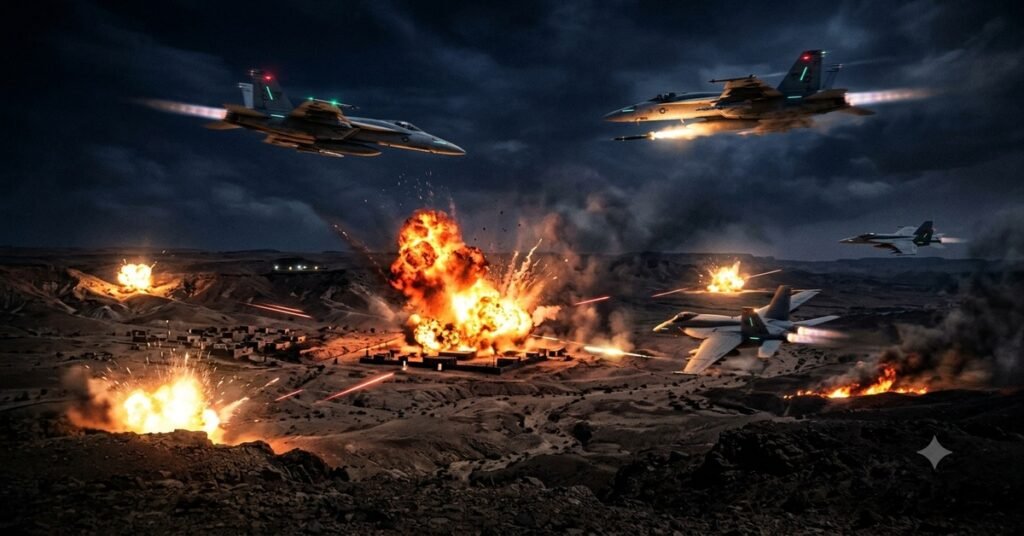
US Iran strikes 2026 — why is the entire world watching this situation so closely right now? Millions of people are searching for the latest updates as events unfold in real time. Furthermore, what began as a targeted military operation earlier this year has escalated into one of the most serious and sustained military conflicts involving the United States in decades. However, the situation changed dramatically in late July 2026 when Iran launched a fresh missile attack on a U.S. base in Jordan — and President Trump responded by resuming strikes on Iran with a pledge to hit the country “very hard.” Moreover, as of August 1, 2026, the U.S. is planning additional strikes on Iranian energy and infrastructure targets within days, oil prices have surged above $100 per barrel, and Kuwait has reported Iranian drone attacks on its territory. As a result, the US Iran strikes 2026 situation has become the defining international news story of the moment. In this article, we cover everything about the US Iran strikes 2026 and what it means going forward. So let us get started!
US Iran Strikes 2026? The Direct Answer
US Iran Strikes 2026 — Where Things Stand Right Now
As of August 1, 2026, the US Iran strikes 2026 situation is escalating rapidly on multiple fronts. Furthermore, the United States is planning fresh strikes on Iranian energy and infrastructure targets as soon as this weekend, according to two U.S. officials familiar with the plans — though officials cautioned the strikes could still be called off. Moreover, President Trump confirmed the direction of travel at a Cabinet meeting on July 31, saying the U.S. would be “hitting them very hard” — signaling that the military campaign against Iran is not ending anytime soon. As a result, the Middle East is on high alert, the State Department has issued fresh travel warnings urging Americans to consider departing the region, and Iran has threatened retaliation against any country hosting U.S. military bases.
US Iran Strikes 2026 — Kuwait Drone Attacks Reported
The US Iran strikes 2026 escalation reached a new threshold on August 1, 2026 when Kuwaiti authorities reported Iranian drone attacks on Kuwaiti infrastructure and U.S. military facilities in the country. Furthermore, Kuwait has been a key staging point for U.S. military operations in the region, making it a target for Iranian pressure. Moreover, Iran’s Supreme National Security Council Secretary Mohammad Bagher Zolqadr announced that Tehran would tighten its declared closure of the Strait of Hormuz due to a United States naval blockade of shipping traffic from or to Iranian ports. As a result, the conflict has expanded beyond direct U.S.-Iran military exchanges to affect multiple regional allies, global shipping routes, and the international oil market simultaneously.
US Iran Strikes 2026? How It All Started
US Iran Strikes 2026 — The February 28 Opening Strikes
The US Iran strikes 2026 story has its roots in a coordinated U.S.-Israeli military operation launched on February 28, 2026. Furthermore, Israel launched what it described as a pre-emptive strike on Iran, coordinated with the United States, after repeated warnings that military action would follow if Iran continued its nuclear and ballistic missile programs. Moreover, President Trump confirmed that major combat operations were underway, Iran closed its airspace, and Supreme Leader Ali Khamenei was moved to a secure location outside Tehran. As a result, February 28, 2026 marked the beginning of what has become the most significant direct military confrontation between the United States and Iran in history.
US Iran Strikes 2026 — The Brief Pause and Iran’s Response
The US Iran strikes 2026 campaign went through a pause before resuming with new intensity. Furthermore, Iran’s July 29 missile attack on a U.S. base in Jordan — with all Iranian missiles successfully intercepted by U.S. military defenses — shattered a brief ceasefire period and prompted Trump to resume the military campaign five days later. Moreover, CENTCOM confirmed it launched fresh strikes as a “powerful response” to Iran’s attempted attack, with over 50,000 U.S. service members currently deployed across the Middle East. As a result, the July 29 Iranian attack and the U.S. response represent the most recent and most serious escalation in a conflict that has been building since late February.
Here is a key timeline of the US Iran strikes 2026:
| Date | Event |
|---|---|
| February 28, 2026 | Israel and U.S. launch coordinated pre-emptive strikes on Iran |
| February 28, 2026 | Iran closes airspace — Khamenei moved to secure location |
| June 2025 (background) | 12-day air war between Israel and Iran preceded 2026 conflict |
| July 2026 | Brief ceasefire pause in U.S.-Iran military operations |
| July 29, 2026 | Iran launches missile attack on U.S. base in Jordan — all intercepted |
| July 29, 2026 | U.S. resumes strikes on Iran — explosions in Bandar Abbas and Kish Island |
| July 31, 2026 | Trump says U.S. will be “hitting them very hard” at Cabinet meeting |
| July 31, 2026 | U.S. naval blockade redirects 30 commercial vessels near Iranian ports |
| August 1, 2026 | Kuwait reports Iranian drone attacks on infrastructure and U.S. facilities |
| August 1, 2026 | U.S. planning fresh strikes on Iranian energy targets — possibly this weekend |
| August 1, 2026 | Brent crude oil surges above $100 per barrel for first time since May |
Furthermore, this timeline shows how rapidly and dramatically the situation has escalated from its opening strikes in February to the multi-front conflict unfolding right now. As a result, every day brings new developments that are reshaping the Middle East and the global economy simultaneously.
US Iran Strikes 2026? The Global Economic Impact
US Iran Strikes 2026 — Oil Prices Surge Past $100
The US Iran strikes 2026 have produced immediate and significant consequences for the global economy — most visibly in the oil market. Furthermore, international benchmark Brent crude oil jumped above $100 per barrel this week for the first time since May 2026, driven by fears over global energy supplies as both the Strait of Hormuz and the Bab el Mandeb strait face disruption. Moreover, shipping traffic through the Strait of Hormuz — one of the world’s most critical oil transit chokepoints — has ground to a near standstill, falling from pre-war levels of approximately 130 ships per day to only a handful now. As a result, energy markets worldwide are pricing in a significant and potentially prolonged supply disruption that analysts say could push prices even higher if the conflict continues to escalate.
US Iran Strikes 2026 — The Naval Blockade
The US Iran strikes 2026 campaign includes a significant naval component that is reshaping Middle Eastern maritime trade. Furthermore, U.S. Central Command confirmed that the U.S. military has redirected a total of 30 commercial vessels, disabled two ships, and boarded two others as part of a naval blockade on Iranian ports. Moreover, Iran responded by announcing it would tighten its own closure of the Strait of Hormuz — threatening to further restrict one of the world’s most critical oil shipping lanes. As a result, the combination of U.S. naval blockade and Iranian countermeasures has created one of the most serious global maritime disruptions since World War II.
US Iran Strikes 2026 — State Department Travel Warning
The US Iran strikes 2026 escalation has prompted the State Department to issue a fresh and urgent travel warning for the entire Middle East region. Furthermore, the advisory urges Americans currently in the region to consider departing now — a notably strong recommendation that reflects the U.S. government’s own assessment that the security situation is likely to deteriorate further in the coming days. Moreover, Iran has explicitly threatened to target countries hosting U.S. military bases — a warning that covers Kuwait, Saudi Arabia, Jordan, Qatar, and several other nations where American military personnel are stationed. As a result, the travel warning covers a vast geographic area and affects a large number of American citizens, military personnel, and business travelers across the region.
US Iran Strikes 2026? What Trump Is Saying
US Iran Strikes 2026 — Trump’s Public Statements
President Trump has been consistent and direct in his public messaging about the US Iran strikes 2026 campaign. Furthermore, at a Cabinet meeting on July 31, Trump said the U.S. would be “hitting them very hard” — a phrase he has used repeatedly to signal that the military campaign will continue until Iran agrees to U.S. terms. Moreover, Trump also suggested at the meeting that the strikes are unlikely to end anytime soon, telegraphing a strategy of sustained military pressure designed to force Iran back to the negotiating table. As a result, Trump’s public position is that maximum military and economic pressure — rather than a ceasefire or diplomatic pause — is the path to resolution.
US Iran Strikes 2026 — The Negotiating Endgame
The US Iran strikes 2026 campaign has a stated diplomatic objective behind the military action. Furthermore, Trump has indicated that the U.S. wants Iran to agree to terms on its nuclear program — including a demand for zero uranium enrichment, even for civilian purposes — as the price for ending the military campaign. Moreover, Trump also previously demanded the release of all Americans held by Iran, and Secretary of State Marco Rubio warned that U.S. passports could eventually be declared invalid for travel to Iran if the situation does not resolve. As a result, the military strikes are being used as leverage in an intense and high-stakes negotiation rather than as a purely military objective.
US Iran Strikes 2026? Regional Reactions
US Iran Strikes 2026 — Arab Allies Growing Impatient
The US Iran strikes 2026 campaign is creating strain even among the United States’ closest regional partners. Furthermore, one senior Arab official directly involved in diplomatic efforts told NBC News this week that the situation is “only getting crazier” — reflecting frustration among Arab governments at the pace of daily escalation and the lack of clear diplomatic progress. Moreover, the Iraqi Parliament Speaker condemned the U.S.-Saudi strikes and called for a comprehensive investigation — reflecting growing Iraqi political pressure against hosting U.S. operations. As a result, the diplomatic coalition supporting the U.S. campaign is showing visible signs of strain even as the military operations continue.
US Iran Strikes 2026 — Iran’s Threats to Regional Countries
The US Iran strikes 2026 situation has placed every country hosting U.S. forces in the region under direct threat. Furthermore, Iran has warned that its response to U.S. strikes could include targets in Saudi Arabia — while pledging to avoid disrupting the upcoming Arbaeen pilgrimage, a massive annual Shia Muslim gathering. Moreover, a coalition of Iran-backed militias gave Iraqi authorities until August 7 to respond to recent incidents, warning that direct action would follow if the Iraqi government did not act. As a result, the regional spillover of the US Iran strikes 2026 conflict now threatens to pull additional countries directly into the military confrontation.
Frequently Asked Questions (FAQs)
Q1: Why did the US strike Iran in 2026? The US and Israel launched coordinated pre-emptive strikes on Iran on February 28, 2026, after repeated warnings that military action would follow if Iran continued its nuclear and ballistic missile programs. Furthermore, strikes resumed on July 29, 2026 after Iran launched a fresh missile attack on a U.S. base in Jordan. As a result, the military campaign combines pre-emptive objectives with active retaliatory responses to Iranian attacks.
Q2: Are more US strikes on Iran coming? Yes. As of August 1, 2026, U.S. officials confirmed the U.S. is planning fresh strikes on Iranian energy and infrastructure targets as soon as this weekend. Furthermore, President Trump said at a July 31 Cabinet meeting that the U.S. would be “hitting them very hard.” As a result, further escalation appears highly likely in the immediate days ahead.
Q3: What happened in Kuwait on August 1, 2026? Kuwaiti authorities reported Iranian drone attacks on Kuwaiti infrastructure and U.S. military facilities in the country on August 1, 2026. Furthermore, Iran has threatened to target countries hosting U.S. military bases. As a result, Kuwait became the latest regional country to experience direct Iranian retaliation.
Q4: How is the US-Iran conflict affecting oil prices? Brent crude oil surged above $100 per barrel this week — the first time since May 2026 — driven by fears of a prolonged disruption to energy supplies through the Strait of Hormuz. Furthermore, shipping traffic through the strait has fallen from approximately 130 ships per day to only a handful. As a result, energy markets worldwide are pricing in significant supply risk.
Q5: What does the US want from Iran? President Trump has stated that the U.S. wants Iran to agree to zero uranium enrichment — even for civilian purposes — as well as the release of all Americans held by Iran. Furthermore, the strikes are being used as leverage to force Iran to negotiate on these terms. As a result, the military campaign is fundamentally tied to an ambitious and sweeping diplomatic objective.
Q6: Should Americans travel to the Middle East right now? No. The U.S. State Department has issued a fresh travel warning urging Americans currently in the Middle East to consider departing now. Furthermore, Iran has explicitly threatened countries hosting U.S. military bases, and the security situation is expected to deteriorate further. As a result, the U.S. government’s own advice is to leave the region if possible.
Conclusion
So what is the full picture of the US Iran strikes 2026 situation as of August 1, 2026? The answer is that this is a rapidly escalating military conflict with no clear end in sight. Furthermore, after initial coordinated U.S.-Israeli strikes on February 28, 2026, the campaign resumed with new intensity on July 29 following an Iranian missile attack on a U.S. base in Jordan — with Trump pledging to hit Iran “very hard” and planning fresh strikes on energy targets as soon as this weekend. Moreover, the conflict has now spread to Kuwait with Iranian drone attacks, disrupted global oil shipping through the Strait of Hormuz, pushed Brent crude above $100 per barrel, and triggered a State Department travel warning for the entire Middle East. As a result, the US Iran strikes 2026 story is the most consequential ongoing international news event of the moment — and the situation is changing by the hour.
Stay tuned to WorldForbes for the latest updates on the US Iran strikes 2026, Middle East news, and global security developments as they happen.