
Introduction
Trump Iran last chance — what does it mean and why is the world watching so closely? Millions of people are searching for answers as this fast-moving story unfolds by the hour. Furthermore, U.S. President Donald Trump announced on August 3, 2026, that ongoing negotiations with Iran represent the country’s “last chance” to forge a deal and avoid a massive escalation of U.S. military strikes. However, in a story full of contradictions, Iran’s Foreign Ministry flatly denied that any talks with the United States were taking place at all — even as Trump insisted they were happening. Moreover, Treasury Secretary Scott Bessent added a stunning development on August 4, telling CNBC that a deal to reopen the Strait of Hormuz could be reached “today or tomorrow” — sending global oil prices swinging dramatically in response. As a result, the Trump Iran last chance situation is the most consequential diplomatic and military story in the world right now. In this article, we cover everything about the Trump Iran last chance warning and exactly where things stand. So let us get started!
Trump Iran Last Chance? The Direct Answer
Trump Iran Last Chance — What Trump Said on August 3
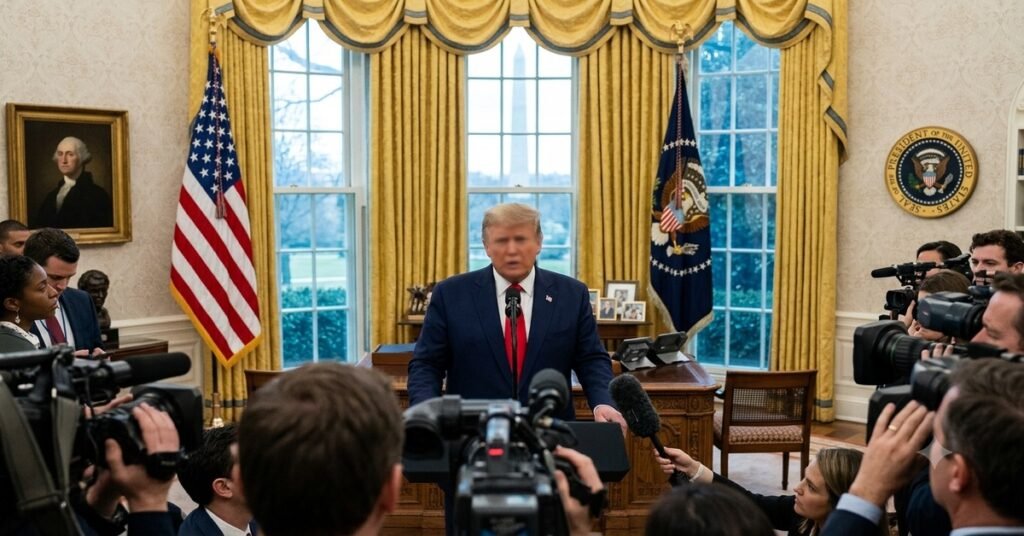
The Trump Iran last chance story began with a remarkable Oval Office statement on Monday, August 3, 2026. Furthermore, Trump told reporters directly that new talks between Washington and Tehran are the “last chance” for Iran to forge a deal and avoid an escalation of U.S. strikes — adding the phrase that immediately went viral around the world: “I want to give them every last chance before decapitation.” Moreover, Trump said he called off what the Pentagon had planned as “the biggest attack since World War II” after receiving calls from Saudi Arabia, the United Arab Emirates, Qatar, and other Gulf allies who asked him to give diplomacy one final opportunity. As a result, Trump’s decision to pause the military campaign — again — came down to a direct request from America’s closest Middle Eastern partners.
Trump Iran Last Chance — Iran Says There Are No Talks
The Trump Iran last chance announcement immediately collided with a flat denial from Tehran. Furthermore, Iran’s Foreign Ministry spokesperson Esmaeil Baghaei stated clearly: “We currently do not have negotiations with America.” Moreover, Iran insisted it was only dealing with Oman as a mediator — not engaging directly with the United States — a position that directly contradicted Trump’s claim that talks were actively underway. As a result, Trump fired back on Truth Social, writing that “Iranian Leadership is unbelievably duplicitous!” — accusing Iran of publicly denying talks that he says are happening behind the scenes.
Trump Iran Last Chance? The Full Diplomatic Picture
Trump Iran Last Chance — The Strait of Hormuz Deal in Sight
The most significant development in the Trump Iran last chance story came from an unexpected source. Furthermore, Treasury Secretary Scott Bessent told CNBC’s Squawk Box on Tuesday, August 4, that “there is a chance we may have a deal today or tomorrow to open the Strait” — a statement that immediately sent global oil markets into sharp reverse. Moreover, Bessent said any deal would allow freedom of movement through the Strait of Hormuz — one of the world’s most critical oil shipping chokepoints — though he declined to specify the exact terms being discussed. As a result, Brent crude oil fell sharply from above $100 per barrel — dropping to approximately $80 per barrel — as markets priced in the possibility of a diplomatic resolution that would reopen global energy shipping lanes.
Trump Iran Last Chance — What The Negotiating Phases Look Like
The Trump Iran last chance diplomatic framework has a clear phased structure that both sides are working from. Furthermore, Trump told reporters at the Oval Office that negotiations would focus first on reopening the Strait of Hormuz — treating that as Phase 1 — and then create a pathway for Iran to address the United States’ concerns about its nuclear program as Phase 2. Moreover, Iran has separately been in talks with Oman about establishing a safe, temporary corridor for vessels through the Strait — with as many as 5 million barrels of crude per day currently leaving through a southern route close to the Omani coastline, far below the pre-war level of approximately 130 ships per day. As a result, even a partial Hormuz reopening through an Oman-mediated corridor could provide meaningful relief to global energy markets while full negotiations continue.
Trump Iran Last Chance — The Gulf Allies’ Role
The Trump Iran last chance decision to pause military strikes was driven directly by pressure from America’s Gulf partners. Furthermore, Trump confirmed that Saudi Arabia, the United Arab Emirates, Qatar, and other countries called him personally to urge restraint and ask that Iran be given one more opportunity to negotiate. Moreover, these Gulf states have enormous economic stakes in the outcome — both as oil exporters who benefit from high prices but also as countries whose own infrastructure, shipping lanes, and populations are directly threatened by a military conflict that shows no sign of ending. As a result, the Gulf allies effectively bought Iran more time at the negotiating table — and they have staked significant diplomatic credibility on the assumption that this time Iran will use it seriously.
Here is a quick overview of the Trump Iran last chance situation as of August 4, 2026:
| Detail | Information |
|---|---|
| Trump’s statement | “Last chance before decapitation” — Oval Office, August 3, 2026 |
| Strikes called off | Trump paused “biggest attack since WWII” at Gulf allies’ request |
| Iran’s response | Foreign Ministry denies any direct talks with U.S. |
| Bessent’s claim | Deal to reopen Strait of Hormuz possible “today or tomorrow” |
| Oil price reaction | Brent crude dropped from $100+ to approximately $80 per barrel |
| Negotiating Phase 1 | Reopening of Strait of Hormuz |
| Negotiating Phase 2 | Pathway to address U.S. nuclear program concerns |
| Iran-Oman talks | Temporary corridor discussions for Hormuz shipping |
| US vessels diverted | 44 commercial vessels diverted under U.S. naval blockade |
| Pentagon backup plan | Four military escalation options ready if talks collapse |
Furthermore, this overview captures the extraordinary tension between military escalation and diplomatic possibility that defines the Trump Iran last chance moment. As a result, the next 24 to 48 hours could determine whether the five-month U.S.-Iran conflict moves toward resolution or its most dangerous phase yet.
Trump Iran Last Chance? What “Before Decapitation” Means
Trump Iran Last Chance — Understanding The Threat
The Trump Iran last chance statement’s most alarming phrase — “before decapitation” — requires careful interpretation. Furthermore, Trump used the word to signal that if diplomacy fails, the United States would move beyond strikes on infrastructure, energy facilities, and military targets and potentially target Iran’s political and military leadership directly. Moreover, Axios reported that military officials were actively preparing a massive bombing campaign and had readied four primary options for Trump to choose from — representing maximum pressure options well beyond anything the U.S. has deployed so far. As a result, the “decapitation” language is not rhetorical flourish — it reflects a real military planning process that is running in parallel with the diplomatic track.
Trump Iran Last Chance — Trump Has Called Off Strikes Before
The Trump Iran last chance warning comes with important historical context. Furthermore, this is not the first time Trump has threatened a massive strike on Iran and then pulled back — he did the same in June 2026 after threatening to hit Iran “VERY HARD” and seize control of Kharg Island, only to call off the strikes in a subsequent social media post. Moreover, critics have argued that the repeated pattern of threatening massive strikes and then pausing has reduced the credibility of U.S. deterrence — giving Iran reason to believe that each new threat will also eventually be walked back. As a result, the question of whether “last chance” truly means what Trump says it means — or whether it is another move in a prolonged negotiating pattern — is one that both Iran and America’s allies are actively debating.
Trump Iran Last Chance? The Oil Market Impact
Trump Iran Last Chance — Oil Falls on Diplomacy Hope
The Trump Iran last chance diplomatic pause produced an immediate and dramatic reaction in global energy markets. Furthermore, Brent crude oil dropped 4.2% to approximately $84 per barrel immediately after Trump called off the planned massive strikes on Monday — its biggest single-day drop since the conflict began. Moreover, when Bessent’s Squawk Box comments about a Strait deal being possible “today or tomorrow” added further optimism, West Texas Intermediate futures fell an additional 4.44% to approximately $76.77 per barrel as of Tuesday morning. As a result, oil markets are now pricing in a meaningful probability of diplomatic progress — though analysts warn that prices could spike violently if talks collapse and strikes resume.
Trump Iran Last Chance — Why The Strait Matters So Much
The Trump Iran last chance negotiations are fundamentally about one geographic chokepoint — the Strait of Hormuz. Furthermore, before the war, the Strait carried approximately 20 percent of the world’s oil supply — roughly 130 ships per day — making it the single most important oil transit point on earth. Moreover, the combination of Iran’s partial closure and the U.S. naval blockade has reduced that flow to a tiny fraction of normal levels — pushing oil prices above $100 per barrel and creating genuine supply anxiety across energy markets worldwide. As a result, even a partial reopening of the Strait through the Oman-mediated temporary corridor would be worth billions of dollars per day to the global economy — which is precisely why both the U.S. and its Gulf allies are pushing so hard for a Hormuz deal as the first phase of any agreement.
Frequently Asked Questions (FAQs)
Q1: What did Trump mean by “last chance before decapitation”? Trump used this phrase to warn Iran that if the current round of talks fails, the U.S. would escalate beyond strikes on infrastructure and military facilities to potentially targeting Iran’s political and military leadership directly. Furthermore, military officials have already prepared four escalation options for Trump to choose from. As a result, the “decapitation” language reflects real military planning running alongside the diplomatic track.
Q2: Why did Trump call off the massive strikes on Iran? Trump called off what he described as “the biggest attack since World War II” after receiving direct calls from Saudi Arabia, the UAE, Qatar, and other Gulf allies asking him to give diplomacy one more chance. Furthermore, Trump said “many countries called” and that all of them wanted to give Iran “a last chance.” As a result, America’s Gulf partners effectively paused the military escalation with their direct personal appeals.
Q3: Is Iran actually negotiating with the United States? Iran’s Foreign Ministry publicly denies any direct talks with the U.S. — saying it is only dealing with Oman as a mediator. Furthermore, Trump insists talks are underway “whether Iran wants to admit it or not” and called Iran’s leadership “unbelievably duplicitous.” As a result, both sides are publicly contradicting each other on a fundamental question about whether negotiations are even happening.
Q4: What is the Strait of Hormuz deal that Bessent mentioned? Treasury Secretary Scott Bessent told CNBC on August 4 that a deal to reopen the Strait of Hormuz could come “today or tomorrow.” Furthermore, the deal would allow freedom of movement through the strait — potentially through an Oman-mediated temporary corridor. As a result, oil prices dropped sharply on the news as markets priced in the possibility of a partial resolution to the energy supply disruption.
Q5: What happens if the Iran talks fail? If talks collapse, the Pentagon has four military escalation options ready for Trump to deploy. Furthermore, Axios reported these options represent maximum pressure scenarios well beyond anything the U.S. has used in the five-month conflict so far. As a result, a collapse of the current diplomatic track could trigger the most dangerous military escalation of the entire U.S.-Iran war.
Q6: How has the Iran conflict affected oil prices? Oil prices surged above $100 per barrel at the height of the conflict before falling sharply — dropping to approximately $76 to $84 per barrel — after Trump called off planned strikes and Bessent suggested a Hormuz deal was imminent. Furthermore, the prices remain highly volatile and could spike again instantly if military action resumes. As a result, oil markets are now effectively trading on the hour-by-hour diplomatic news from Washington and Tehran.
Conclusion
So what is the full picture of the Trump Iran last chance situation as of August 4, 2026? The answer is that the world is standing at a genuine crossroads. Furthermore, President Trump has called off a massive planned military strike on Iran — described internally as the biggest since World War II — in response to Gulf ally appeals, giving Tehran what he called its “last chance before decapitation” to reach a deal. Moreover, Treasury Secretary Bessent added extraordinary urgency to the moment by suggesting a Strait of Hormuz deal could come within 24 to 48 hours — sending oil prices tumbling from above $100 to approximately $80 per barrel. As a result, the next 24 to 48 hours could determine whether the five-month U.S.-Iran war moves toward a diplomatic resolution or explodes into its most dangerous and destructive phase yet.
Stay tuned to WorldForbes for the latest updates on the Trump Iran last chance negotiations, Middle East war news, and global energy market developments as they happen.
Pingback: What Is The Punishment For Swatting: Everything You Need To Know in 2026 - WorldForbes
Pingback: Can I Take A Lighter On Airplane: Everything You Need To Know in 2026 - WorldForbes
Pingback: Plant Paper Toilet Paper: Everything You Need To Know in 2026 - WorldForbes