
Introduction
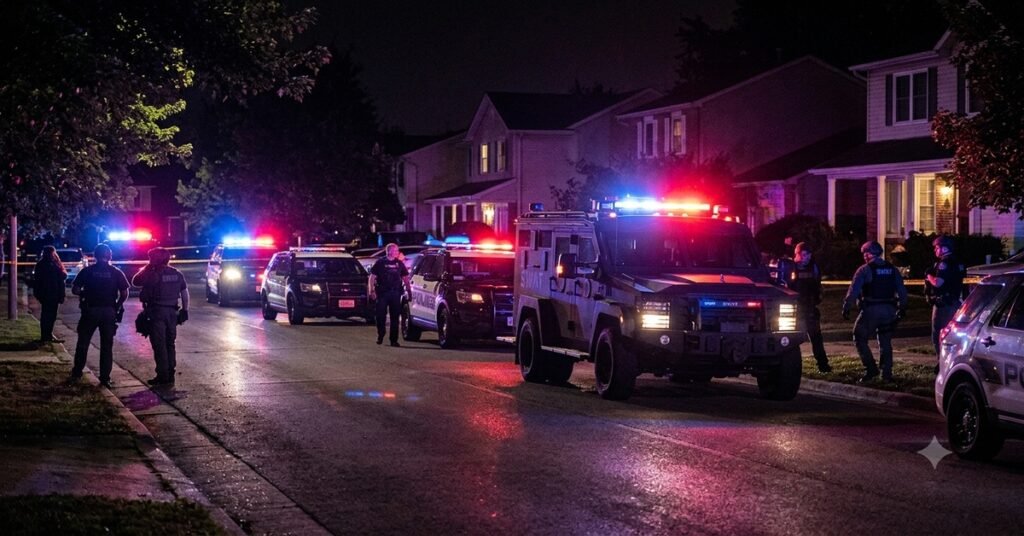
What is the punishment for swatting — as this dangerous prank continues making national headlines in 2026, more people want to understand exactly how the law treats it. Furthermore, swatting involves calling 911 with a fabricated violent emergency, such as a hostage situation or active shooting, specifically to trigger a heavily armed police response at someone’s home. However, what may look like a harmless prank to the person making the call is treated as a serious violent felony by prosecutors, carrying penalties that can reach decades in prison or even life. Moreover, understanding the full range of consequences, from federal charges to state-level laws to civil lawsuits, makes clear just how seriously the justice system now treats this crime. In this article, we cover everything about what the punishment for swatting actually looks like in 2026. So let us get started!
What Is The Punishment For Swatting? The Direct Answer
What Is The Punishment For Swatting — Federal Penalties
The most direct answer to what is the punishment for swatting starts at the federal level. Furthermore, federal law punishes swatting with up to five years in prison for the base offense under the federal false information and hoaxes statute, since a swatting call almost always crosses state lines through phone or internet networks, giving federal authorities jurisdiction. Moreover, if the swatting incident results in serious bodily injury, the maximum federal sentence increases to up to 20 years in prison, and if someone dies as a result, the perpetrator can face life in federal prison under 18 U.S.C. Section 1038. As a result, federal prosecutors treat swatting as a violent felony with penalties that scale dramatically based on the real-world harm it causes.
What Is The Punishment For Swatting — Beyond Prison Time
Prison time is not the only consequence tied to what is the punishment for swatting. Furthermore, courts routinely impose substantial criminal fines alongside imprisonment, often ranging from several thousand to tens of thousands of dollars, and federal courts must also order defendants to reimburse emergency responders for the costs of the police response their hoax triggered. Moreover, in Florida specifically, a conviction requires restitution covering the full costs incurred by the offense, including the expense of the police response itself. As a result, a swatting conviction can leave a perpetrator facing years in prison, major fines, and a substantial restitution bill all at once.
What Is The Punishment For Swatting? State-Level Penalties
What Is The Punishment For Swatting — How State Laws Differ
Answering what is the punishment for swatting also requires looking at the state level, since penalties vary significantly depending on where the offense occurs. Furthermore, states including California, Florida, Texas, and Michigan have enacted or strengthened dedicated swatting-specific statutes following documented incidents, giving prosecutors clearer legal tools and often steeper penalty tiers. Moreover, states without a dedicated swatting law generally prosecute the conduct under broader statutes covering false emergency reports, terroristic threats, or harassment, which typically carry lower maximum sentences and give prosecutors less flexibility in describing the specific harm caused. As a result, where a swatting incident occurs can significantly affect both the charges filed and the potential sentence.
What Is The Punishment For Swatting — Escalating Penalties Based On Harm
A consistent pattern across both federal and state law is that what is the punishment for swatting escalates sharply based on outcome. Furthermore, in Florida, a swatting report that leads to a response resulting in great bodily harm or a disabling injury becomes a third-degree felony punishable by up to five years in prison and a $5,000 fine, while a response resulting in death becomes a second-degree felony carrying up to 15 years in prison. Moreover, several states are actively moving to increase these penalties further in 2026, including proposed legislation in Minnesota that would toughen swatting penalties specifically when the target is an elected official, judge, prosecutor, correctional employee, or police officer. As a result, lawmakers across the country continue pushing for harsher, more specific swatting penalties as the crime becomes more common.
Here is a quick overview of swatting penalties by outcome and jurisdiction:
Outcome / JurisdictionMaximum PenaltyFederal (base offense)Up to 5 years in prisonFederal (serious bodily injury)Up to 20 years in prisonFederal (death results)Life in prisonFlorida (great bodily harm)5 years, $5,000 fineFlorida (death results)15 years (second-degree felony)Federal Anti-Swatting ActUp to 20 years if someone is seriously hurt
Furthermore, this table shows how consistently the legal system scales punishment to match real-world harm, regardless of whether the case is prosecuted federally or at the state level. As a result, even a swatting call that causes no physical injury can still result in years of federal prison time.
What Is The Punishment For Swatting? Civil Liability And Growing Enforcement
What Is The Punishment For Swatting — Civil Lawsuits And Victim Remedies
Criminal punishment is only part of what is the punishment for swatting, since perpetrators can also face civil liability. Furthermore, victims of swatting incidents can pursue civil lawsuits against perpetrators separate from any criminal case, seeking compensation for damages tied to the incident. Moreover, legal experts recommend that swatting victims document everything immediately and preserve all electronic communications with any suspected perpetrator, since this evidence can support both the criminal prosecution and any civil claim pursued afterward. As a result, someone convicted of swatting can face financial consequences well beyond court-ordered fines and restitution.
What Is The Punishment For Swatting — Why Enforcement Has Intensified
Enforcement around what is the punishment for swatting has intensified substantially in recent years. Furthermore, the FBI’s National Crisis Operations and Policy Center has tracked over 550 swatting incidents reported since May 2023 alone, with officials noting the actual number is almost certainly higher since many incidents go unreported. Moreover, targets have expanded well beyond the online gaming communities where swatting originated, now including elected officials, journalists, school administrators, judges, and social media personalities, prompting federal lawmakers to introduce dedicated legislation, including the Preserving Safe Communities by Ending Swatting Act, aimed at expanding federal criminal hoax statutes specifically to address swatting. As a result, both federal and state governments continue actively strengthening laws and enforcement in response to the crime’s growing frequency and its expanding range of targets.
Frequently Asked Questions (FAQs)
Q1: What is the maximum federal prison sentence for swatting? The base federal offense carries up to five years in prison, increasing to up to 20 years if the incident causes serious bodily injury, and up to life in prison if someone dies as a result. Furthermore, this applies under the federal false information and hoaxes statute, 18 U.S.C. Section 1038. As a result, federal penalties scale significantly based on the real-world harm caused.
Q2: Is swatting a felony or a misdemeanor? In most cases, swatting is prosecuted as a felony at both the federal and state level. Furthermore, in some states it can begin as a misdemeanor but quickly escalate to a felony depending on the outcome. As a result, the vast majority of swatting convictions carry felony-level consequences.
Q3: Do swatting perpetrators have to pay for the police response? Yes, in many cases. Furthermore, federal courts can order defendants to reimburse emergency responders for the cost of the response, and Florida specifically requires restitution covering the full costs of the incident. As a result, financial penalties often extend well beyond standard court fines.
Q4: Which states have the strongest swatting laws? California, Florida, Texas, and Michigan are among the states with the clearest dedicated swatting-specific statutes as of 2026. Furthermore, several other states are actively considering legislation to increase swatting penalties further. As a result, penalties and available charges can vary meaningfully depending on where the offense occurs.
Q5: Can swatting victims sue the perpetrator? Yes. Furthermore, victims can pursue civil lawsuits separate from criminal prosecution to seek compensation for damages related to the incident. As a result, someone convicted of swatting can face both criminal penalties and civil financial liability.
Q6: How common is swatting in 2026? The FBI’s National Crisis Operations and Policy Center has tracked over 550 reported swatting incidents since May 2023, with officials believing the true number is higher due to underreporting. Furthermore, targets now include public officials, journalists, and public figures well beyond the crime’s origins in online gaming communities. As a result, lawmakers continue introducing new legislation to address the growing frequency of these incidents.
Conclusion
So what is the punishment for swatting? The answer is severe and scales directly with the harm caused: up to five years in federal prison for a base offense, up to 20 years if serious injury results, and up to life in prison if someone dies, alongside substantial fines, mandatory restitution, and potential civil liability. Furthermore, state laws add another layer of consequences, with states like California, Florida, Texas, and Michigan enacting dedicated swatting statutes and lawmakers in multiple states actively pushing to toughen penalties further in 2026. Moreover, with the FBI tracking hundreds of reported incidents and enforcement intensifying across the country, swatting is treated as a serious violent felony, not a harmless prank, by prosecutors nationwide. As a result, anyone considering swatting as a joke or act of revenge faces consequences that can realistically include years, or even decades, behind bars.
Stay tuned to WorldForbes for the latest legal news, crime and justice coverage, and public safety updates in 2026.
Pingback: Aaron Farinacci Spokane Arson Arrest: The Full Story of Who Started the Old Trails Fire - WorldForbes
Pingback: How Strong Are Power Lines With Snow: Everything You Need To Know in 2026 - WorldForbes
Pingback: US Jobs Report July 2026: Economy Lost 23,000 Jobs — What It Means For You - WorldForbes