
Introduction
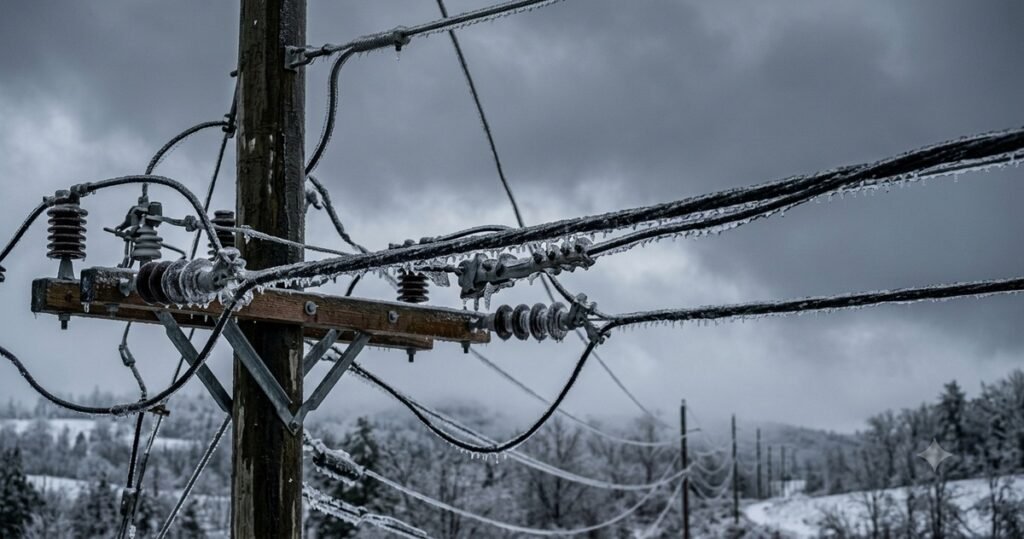
How strong are power lines with snow — every major winter storm brings this question back into focus as utility crews scramble to prevent widespread outages. Furthermore, most people assume power lines can handle a typical snowstorm without much trouble, but the real engineering story is more precise, and more dramatic, than most realize. However, it isn’t usually the snow itself that causes the most damage, it’s ice, since even a thin glaze of freezing rain can add hundreds of pounds of extra weight to a single span of line. Moreover, understanding exactly how much weight power lines are built to handle, and where that threshold breaks down, helps explain why some storms cause widespread blackouts while others pass with barely a flicker. In this article, we cover everything about how strong power lines really are with snow and ice, and what happens when that strength is exceeded. So let us get started!
How Strong Are Power Lines With Snow? The Direct Answer
How Strong Are Power Lines With Snow — Design Standards For Ice And Snow
Understanding how strong are power lines with snow starts with the engineering standards utilities actually build to. Furthermore, utility companies use guidelines from the National Electrical Safety Code, or NESC, along with regional weather scenarios, to determine ice-loading design criteria for overhead lines, with most distribution lines designed to handle up to half an inch of ice combined with winds around 40 miles per hour. Moreover, newer transmission lines are often built to withstand more extreme conditions, with some utilities designing new transmission infrastructure to handle up to 1.25 inches of ice with no wind, or wind gusts up to 90 miles per hour with no ice present. As a result, power lines are engineered with a meaningful safety margin, but that margin has clear, calculable limits.
How Strong Are Power Lines With Snow — Why Ice Matters More Than Snow
A key part of understanding how strong are power lines with snow is recognizing that ice, not snow itself, tends to cause the most structural damage. Furthermore, meteorologists generally classify an event as an ice storm once glaze thickness exceeds about a quarter inch, and utilities warn that damage to power lines can begin at exactly that threshold. Moreover, wet, heavy snow can still create significant strain, particularly when it accumulates on tree branches near power lines, but a layer of ice adds weight far more efficiently than an equivalent depth of snow, since ice is denser and clings more tightly to conductors. As a result, forecasters and utility companies pay especially close attention to ice accumulation forecasts during winter storms, even when total snowfall amounts appear modest.
How Strong Are Power Lines With Snow? The Real Numbers
How Strong Are Power Lines With Snow — How Much Weight Ice Actually Adds
Getting specific about how strong are power lines with snow means looking at real weight figures. Furthermore, a quarter inch of ice accumulation on power lines can add up to 250 pounds of extra weight, while half an inch of ice on a 300-foot span of one-inch-diameter line adds roughly 281 to 500 pounds, and in some reported cases, more than 1,000 pounds. Moreover, at the more extreme end, one utility reported that two inches of ice accumulation on the same type of span can add more than 2,000 pounds of weight, an amount capable of dramatically increasing line sag and reducing critical ground clearance. As a result, even accumulations that sound minor in inches translate into hundreds or thousands of pounds of real structural stress on power lines.
How Strong Are Power Lines With Snow — When Lines Actually Fail
Understanding how strong are power lines with snow also means understanding the specific failure points utilities watch for. Furthermore, power outages commonly begin once ice accumulation reaches around a quarter inch, and extreme events involving three to five inches of built-up ice have been documented causing broken poles, downed lines, and tens of thousands of customers losing power in a single storm. Moreover, ice buildup also creates a secondary danger called “galloping,” where ice forms a teardrop shape around the wire that behaves like an airplane wing in strong wind, causing the line to oscillate up and down until it breaks equipment or makes contact with other lines. As a result, both raw weight and wind-driven movement contribute to how and when power lines ultimately fail during winter storms.
Here is a quick overview of ice thickness and its impact on power lines:
Ice ThicknessApproximate Added Weight (300-ft span)Typical Impact0.25 inch~140-250 lbsOutages commonly begin at this threshold0.5 inch~281-1,000+ lbsSignificant sag, damage risk increases1 inch~749 lbsSerious risk of pole and line failure2 inches2,000+ lbsExtreme risk, widespread outages likely
Furthermore, this table reflects figures reported by multiple utility companies and weather sources, though exact weight can vary based on line diameter, span length, and wind conditions. As a result, even relatively modest ice accumulations can represent a serious structural load on the power grid.
How Strong Are Power Lines With Snow? Trees And Additional Risk Factors
How Strong Are Power Lines With Snow — The Tree Branch Factor
A major variable in how strong are power lines with snow involves nearby trees, not just the lines themselves. Furthermore, ice accumulation can make falling tree branches roughly 30 times heavier than their normal weight, dramatically increasing the likelihood that a branch will snap and land directly on a power line. Moreover, distribution circuits, the lower-voltage lines that run through neighborhoods, tend to fail before higher-voltage transmission lines specifically because they run closer to trees and use lighter components overall. As a result, tree-related damage remains one of the single biggest contributors to winter power outages, even when the lines themselves are technically within their designed ice-load limits.
How Strong Are Power Lines With Snow — What Utilities Do To Prevent Failures
Utility companies actively work to address how strong are power lines with snow through targeted infrastructure investments. Furthermore, some companies use power line heaters designed to prevent ice from accumulating in the first place, along with weight-distributing hardware and thicker conductors in regions that regularly face severe winter weather. Moreover, because building an entire regional grid to withstand extreme ice loads is often cost-prohibitive, especially in warmer states where major ice storms are rare, transmission lines in southern states are frequently not built to the same ice-load standards as lines in colder, ice-prone regions. As a result, the same storm that causes minimal disruption in one region can cause widespread outages in another, purely based on how local infrastructure was originally designed.
Frequently Asked Questions (FAQs)
Q1: How much ice can power lines actually handle? Distribution lines are commonly designed to handle up to half an inch of ice with winds around 40 mph, while some transmission lines are built for up to 1.25 inches of ice with no wind. Furthermore, damage risk increases significantly once accumulation exceeds these design thresholds. As a result, the exact capacity varies by region and line type.
Q2: At what point does ice start causing power outages? Power outages commonly begin once ice accumulation reaches around a quarter inch. Furthermore, a quarter inch of ice can add up to 250 pounds of weight to a power line. As a result, even relatively thin ice layers can be enough to trigger outages.
Q3: Is snow or ice more dangerous for power lines? Ice is generally considered more damaging than an equivalent depth of snow, since it is denser and adheres more tightly to conductors and tree branches. Furthermore, wet, heavy snow can still add significant strain, especially to nearby trees. As a result, ice accumulation forecasts are typically watched more closely than total snowfall predictions during winter storms.
Q4: How much weight does a half-inch of ice add to a power line? Reported figures vary by source and line specifications, but half an inch of ice on a typical span has been documented adding anywhere from roughly 281 pounds up to over 1,000 pounds. Furthermore, this added weight significantly increases line sag and structural strain. As a result, half an inch is often treated as a serious threshold by utility companies.
Q5: Why do tree branches cause so much power line damage in winter storms? Ice accumulation can make tree branches roughly 30 times heavier than normal, dramatically increasing the risk that a branch will snap and fall onto nearby power lines. Furthermore, this remains one of the leading causes of winter power outages. As a result, utilities often prioritize tree trimming near power lines as a key prevention strategy.
Q6: What is “galloping” on a power line? Galloping occurs when ice builds up around a wire in a teardrop shape that behaves aerodynamically like an airplane wing, causing the line to oscillate up and down in strong wind. Furthermore, this motion can damage equipment or cause lines to make contact with each other. As a result, galloping represents a wind-driven failure risk separate from simple weight overload.
Conclusion
So how strong are power lines with snow and ice? The answer comes down to precise engineering limits: most distribution lines are built to handle around half an inch of ice with moderate wind, while transmission lines can often withstand more, but real-world accumulation frequently pushes past these thresholds, adding anywhere from 140 pounds to over 2,000 pounds of extra weight on a single span. Furthermore, ice, not snow itself, tends to cause the most damage, both by directly weighing down lines and by making nearby tree branches up to 30 times heavier and far more likely to fall. Moreover, utilities continue investing in line heaters, reinforced hardware, and regionally tailored infrastructure standards to reduce outage risk, though building for extreme ice loads everywhere remains cost-prohibitive in warmer regions. As a result, the true strength of any power line during a winter storm depends heavily on local design standards, ice thickness, wind speed, and how close nearby trees happen to be.
Stay tuned to WorldForbes for the latest weather safety guides, infrastructure explainers, and storm preparedness tips in 2026.
Pingback: What Gun Did Dirty Harry Use? The Complete Guide to the 44 Magnum - WorldForbes
Pingback: Nazir Stackhouse 2026: Everything About the Packers’ Rising Nose Tackle - WorldForbes