
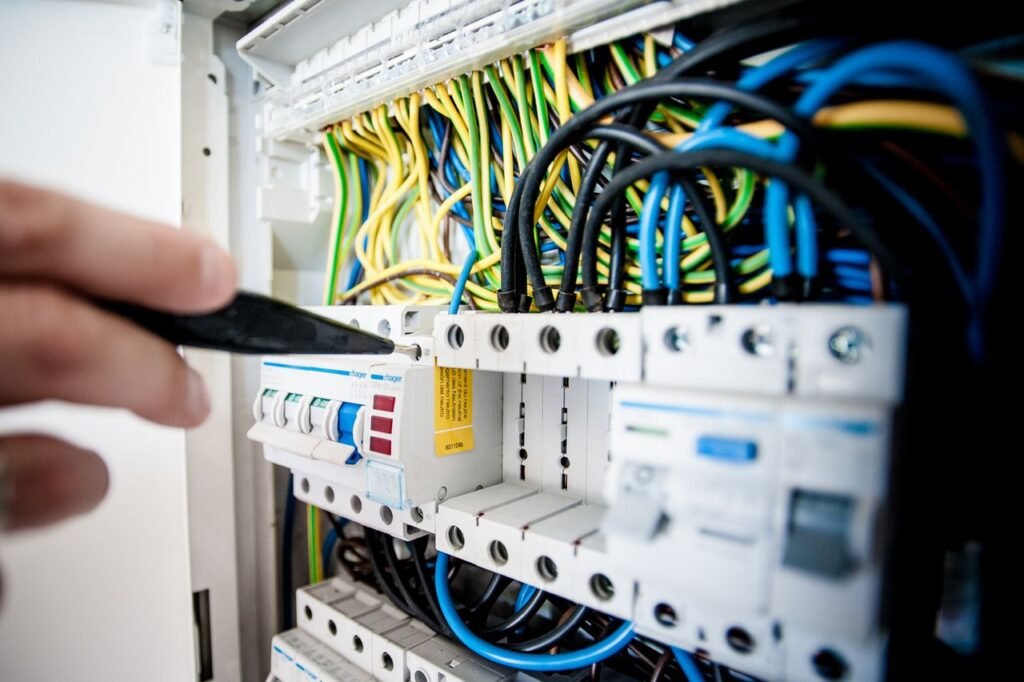
For decades, the default advice to American teenagers was simple: get a four-year degree. But a degree is not the only route to a skilled, well-paid career — and for a growing number of students, it is not the best one. Trade schools train people for specific skilled occupations — electrician, plumber, welder, HVAC technician, carpenter — in months rather than years, often at a fraction of the cost of a bachelor’s degree, and usually with a job waiting at the end.
This guide explains what a trade school is, how it differs from college and from an apprenticeship, which careers it leads to, what those careers pay, and how to choose a programme that is worth your time and money. All salary figures come from the U.S. Bureau of Labor Statistics (BLS) Occupational Employment and Wage Statistics, May 2025, re-verified 13 November 2026.
What Is a Trade School?
A trade school — also called a vocational school, technical school or career college — is a post-secondary institution that teaches the hands-on skills for one specific occupation. Instead of general education courses in literature, history and maths, students spend most of their time in workshops and labs, learning the trade itself: wiring circuits, joining pipe, welding metal, servicing heating and cooling systems, or framing a house.
Programmes are short. Many certificates take six months to two years, compared with four years for a bachelor’s degree. Classes are small and practical, and the qualification at the end is usually a certificate or diploma, or an associate degree for longer programmes, plus preparation for the licence or certification exam the trade requires.
Trade School vs College vs Apprenticeship
The three routes overlap, and many skilled workers use more than one. A four-year college degree teaches broad academic knowledge and opens doors to professional careers that legally require a degree — teaching, nursing, engineering, law. It takes longer and costs more, but it keeps the most options open.
A trade school teaches one occupation, quickly and practically. It suits students who want to start earning sooner, prefer hands-on work, or know exactly what they want to do.
An apprenticeship is paid, on-the-job training combined with classroom study, usually lasting three to five years. Apprentices earn a wage from day one while they learn, and finish as a journeyman — a fully qualified tradesperson. In many trades, the apprenticeship is the main route to a licence: electricians and plumbers typically complete a four- to five-year apprenticeship to reach journeyman status. Many students combine the routes — a few months at trade school first, then an apprenticeship.
Careers You Can Train For
Trade schools cover dozens of occupations. The best-known fall into a few groups.
Construction and building trades. Electricians install and maintain electrical systems in homes, offices and factories. Plumbers, pipefitters and steamfitters install and repair water, gas and heating systems. HVAC technicians install and service heating, ventilation, air conditioning and refrigeration. Carpenters build framing, forms and finish work. Welders join metal in construction, manufacturing, shipyards and pipelines.
Automotive and transport. Automotive service technicians and mechanics diagnose and repair cars and trucks; diesel mechanics work on buses, lorries and heavy equipment; aircraft mechanics service planes.
Healthcare support. Some of the fastest-growing trade careers are in healthcare: dental assistants, medical assistants, pharmacy technicians and diagnostic medical sonographers. These usually need a certificate plus a state credential, and they suit students who want clinical work without a four-year nursing degree.
What Do the Trades Pay?
Pay in the trades is solid, and it is worth quoting real numbers rather than promises. The figures below are national medians from the BLS Occupational Employment and Wage Statistics, May 2025 — the middle of the pay range, so half of workers earn more and half earn less. Local pay varies widely by state, city, union status, employer, overtime and specialisation.
- Electrician: $63,190 a year. Employment projected to grow 9% from 2025 to 2035, with about 72,700 openings a year.
- Plumber, pipefitter and steamfitter: $63,800 a year. Projected growth of 7% from 2025 to 2035, with about 42,000 openings a year.
- HVAC mechanic and installer: $61,010 a year. Projected growth of 11% from 2025 to 2035, with about 40,600 openings a year.
- Carpenter: $60,580 a year. Projected growth of 4% from 2025 to 2035, with about 62,800 openings a year.
- Welder, cutter, solderer and brazer: $53,750 a year. Projected growth of 2% from 2025 to 2035, with about 40,300 openings a year.
For comparison, the median annual wage across all U.S. occupations is around $50,980, so most of these trades pay above the national median. The top 10% of electricians earn more than $108,510 a year, and experienced specialists — in industrial work, data centres or union commercial jobs — can earn well above the median. Pay also rises with the licence level: an apprentice earns a training wage, a journeyman earns the standard rate, and a master tradesperson or contractor can earn substantially more.
Demand is strong for structural reasons. Older tradespeople are retiring in large numbers, new building and infrastructure work continues, and the electrification of homes and the build-out of data centres are adding work for electricians and HVAC technicians in particular.
How Long Does Training Take?
It depends on the trade. HVAC is usually the fastest to enter, with trade-school programmes of six months to two years and an entry-level credential that is lighter than the other trades. Welding programmes typically run six to eighteen months, plus certification tests. Carpentry often takes the form of a four-year apprenticeship, though pre-apprenticeship trade-school courses can last six months to two years. Electrical and plumbing follow a four- to five-year paid apprenticeship to a journeyman licence, with trade school as an optional head start.
Licensing is the key milestone. Most states require electricians and plumbers to be licensed, which means passing a code exam after completing the required training hours. HVAC technicians who handle refrigerants must hold the federal EPA 608 certification. Welder certification comes from the American Welding Society (AWS) and is often preferred by employers. Always check your own state’s licensing board before enrolling — the rules are state-specific.
What Does Trade School Cost?
Costs vary enormously, and this is where students need to be careful. A public community college programme may cost a few thousand dollars in total, while a private for-profit trade school can charge tens of thousands for the same certificate. Before enrolling, compare the total cost — tuition, fees, tools and exam fees — with the starting pay in your area, and ask the school for its completion and job-placement rates. Schools that refuse to share them are telling you something.
Federal financial aid can help: many accredited trade-school programmes qualify for federal grants and loans through the FAFSA, the same form used for college. The maximum Pell Grant is $7,395 for 2026–27, and it does not need to be repaid. Apprenticeships are the cheapest route of all, because the employer pays you while you train. For more on the FAFSA, see our guide FAFSA Explained: How to Apply and Deadlines for 2026–27, and for free money before you borrow, Scholarships Explained: How to Find Them, Apply and Avoid Scams.
How to Choose a Good Programme
Choosing the right school matters more than choosing the right trade. Use this checklist:
- Accreditation. Is the school accredited by a recognised agency, and is the programme recognised by your state’s licensing board? Accreditation is also what makes the programme eligible for federal financial aid.
- Licence and exam pass rates. Ask how many graduates pass the licensing exam on the first attempt, and how many complete the programme at all.
- Employer connections. The best programmes have relationships with local employers and unions, and help place graduates into apprenticeships or jobs.
- Hands-on time. A trade is learned by doing. Ask how much time students spend in the workshop versus the classroom, and inspect the equipment.
- Total cost and debt. Ask for the full price including tools, and ask what the typical graduate borrows. Compare at least two or three programmes before deciding.
Be cautious of schools that advertise guaranteed jobs or six-figure salaries on graduation, pressure you to enrol the same day, or will not put costs in writing. Legitimate programmes do none of these things.
Who Should Consider a Trade?
Trade careers suit people who like working with their hands, solving physical problems, and seeing a finished result at the end of the day. The work is often physically demanding — outdoors, on ladders, in crawl spaces, in all weathers — and it can involve early starts and overtime. But it also offers something many office jobs do not: skills that are hard to outsource or automate, a clear path from apprentice to master, and the realistic option of running your own business one day.
It is also worth saying plainly: choosing a trade is not settling for less. If teaching is the career that appeals to you instead, the degree route is the one to take; read our guide How to Become a Teacher in the US: Certification to compare the two paths.
The Bottom Line
A trade school is a short, practical route into a skilled career: six months to two years of training, a licence or certification at the end, and median pay in the low $60,000s a year for electricians, plumbers and HVAC technicians, with strong demand projected through the 2030s. The keys are choosing an accredited programme recognised by your state’s licensing board, comparing costs honestly, and considering an apprenticeship — paid training from day one — as an alternative or a next step.
Sources
- U.S. Bureau of Labor Statistics — Occupational Employment and Wage Statistics, May 2025: Electricians, Plumbers/Pipefitters/Steamfitters, HVAC Mechanics and Installers, Carpenters, Welders/Cutters/Solderers/Brazers (bls.gov/oes)
- U.S. Bureau of Labor Statistics — Occupational Outlook Handbook, 2025–35 edition: employment projections (bls.gov/ooh)
- U.S. Department of Labor — ApprenticeshipUSA, registered apprenticeship directory (apprenticeship.gov)
- Jobs for the Future — The State of America’s Skilled Trades: A National Report, published 30 September 2026 (with the Burning Glass Institute, for the Alliance for America’s Skilled Trades)
- U.S. Department of Education, Federal Student Aid — FAFSA and Pell Grant information (studentaid.gov)