
Introduction
A fireman leaned a 36 foot ladder against a building — this exact phrase is one of the most searched trigonometry homework problems, appearing in textbooks, online homework platforms, and classroom worksheets year after year. Furthermore, the problem is a classic example of a right-triangle trigonometry question, where students are given the ladder’s length and its distance from the base of the building, then asked to find the angle formed with the ground. However, many students search for this exact wording not because the math is inherently difficult, but because remembering which trigonometric ratio to use, sine, cosine, or tangent, can be confusing without a clear step-by-step walkthrough. Moreover, understanding the full solution method makes it possible to solve any similar ladder-angle problem, regardless of the specific numbers involved. In this article, we cover everything about the fireman and the 36 foot ladder problem, including the full solution and how to apply the same method elsewhere. So let us get started!
A Fireman Leaned A 36 Foot Ladder Against A Building? The Direct Answer
A Fireman Leaned A 36 Foot Ladder Against A Building — The Full Problem Setup
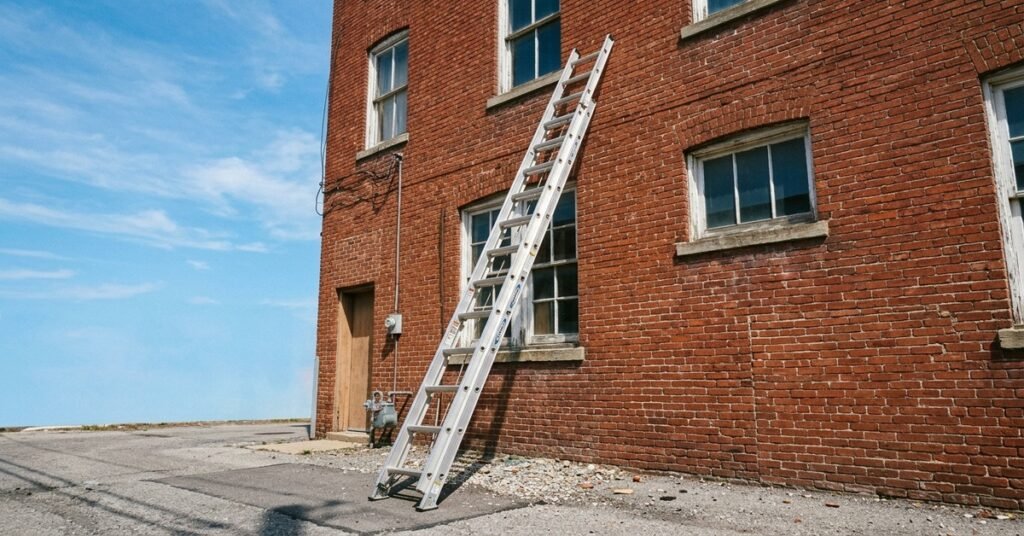
The classic version of a fireman leaned a 36 foot ladder against a building reads as follows: a fireman leans a 36-foot ladder against a building, placing the base of the ladder 7 feet from the base of the building, and the question asks what angle is formed between the ladder and the ground. Furthermore, this setup describes a right triangle, where the ladder itself forms the hypotenuse, the distance from the building forms the base, or adjacent side, and the building’s wall forms the vertical, or opposite side. Moreover, because the problem gives the hypotenuse and the adjacent side but asks for an angle, it specifically calls for the cosine trigonometric ratio rather than sine or tangent. As a result, correctly identifying which sides are known is the first and most important step in solving this type of problem.
A Fireman Leaned A 36 Foot Ladder Against A Building — The Correct Formula
Solving a fireman leaned a 36 foot ladder against a building requires applying the cosine ratio correctly. Furthermore, in a right triangle, cosine of an angle equals the adjacent side divided by the hypotenuse, written as cos(θ) = adjacent / hypotenuse. Moreover, in this specific problem, the adjacent side is the 7-foot distance from the building, and the hypotenuse is the 36-foot ladder itself, giving the equation cos(θ) = 7 / 36. As a result, finding the actual angle requires taking the inverse cosine, or arccos, of that ratio.
A Fireman Leaned A 36 Foot Ladder Against A Building? Solving Step By Step
A Fireman Leaned A 36 Foot Ladder Against A Building — The Full Calculation
Working through a fireman leaned a 36 foot ladder against a building step by step starts with the ratio itself. Furthermore, dividing 7 by 36 gives approximately 0.1944, and applying the inverse cosine function to that value, written as θ = cos⁻¹(0.1944), produces the final angle. Moreover, using a scientific calculator set to degree mode, this calculation results in an angle of approximately 78.8 degrees between the ladder and the ground. As a result, the ladder in this problem leans at a fairly steep angle, which makes sense given that the base is placed relatively close to the building compared to the ladder’s full 36-foot length.
A Fireman Leaned A 36 Foot Ladder Against A Building — Why Cosine Is The Right Choice
Understanding why cosine specifically applies to a fireman leaned a 36 foot ladder against a building helps with solving similar problems correctly. Furthermore, the classic SOH-CAH-TOA memory device explains this clearly: sine equals opposite over hypotenuse, cosine equals adjacent over hypotenuse, and tangent equals opposite over adjacent. Moreover, since this problem provides the adjacent side, the distance from the building, and the hypotenuse, the ladder’s length, cosine is the only ratio that directly connects those two known values to the angle being solved for. As a result, correctly matching the given information to the right trigonometric ratio is the key skill this problem is designed to test.
Here is a quick overview of the problem’s key values and solution:
VariableValueRoleLadder Length (Hypotenuse)36 feetGivenDistance From Building (Adjacent)7 feetGivenTrigonometric Ratio UsedCosineDerived from given sidesFinal Angle≈ 78.8 degreesSolved answer
Furthermore, this table summarizes the full solution path from the given information to the final answer. As a result, students can use this same structure to organize any similar right-triangle angle problem before solving it.
A Fireman Leaned A 36 Foot Ladder Against A Building? Related Practice Problems
A Fireman Leaned A 36 Foot Ladder Against A Building — Common Variations Of This Problem
Textbooks and homework platforms frequently reuse the structure of a fireman leaned a 36 foot ladder against a building with different numbers. Furthermore, common variations include a 36-foot ladder placed 12 feet from the building instead of 7, a 28-foot ladder placed 14 feet from the building, and a 42-foot ladder placed 8.5 feet from the building, each solved using the exact same cosine method. Moreover, some versions of the problem reverse the question, providing the angle and asking students to solve for the ladder’s height or distance from the building instead, which requires using sine or tangent depending on which side is missing. As a result, recognizing the underlying pattern makes it possible to solve dozens of variations of this same core ladder problem.
A Fireman Leaned A 36 Foot Ladder Against A Building — Real-World Relevance
Beyond the classroom, a fireman leaned a 36 foot ladder against a building reflects a genuinely practical real-world application of trigonometry. Furthermore, firefighters and ladder safety standards actually do rely on angle calculations, since a ladder placed too steeply or too shallowly against a building can become unstable or fail to reach its intended height safely. Moreover, general ladder safety guidelines commonly reference a similar principle, recommending a base-to-height ratio that keeps the ladder at a safe working angle, which is conceptually the same math this classic textbook problem is built around. As a result, this seemingly abstract homework question actually mirrors real safety calculations used in professional settings.
Frequently Asked Questions (FAQs)
Q1: What is the answer to the fireman and 36-foot ladder problem? With the ladder placed 7 feet from the base of the building, the angle formed between the ladder and the ground is approximately 78.8 degrees. Furthermore, this is calculated using the inverse cosine of 7 divided by 36. As a result, 78.8 degrees is the standard accepted answer for this classic version of the problem.
Q2: What formula is used to solve this ladder problem? The cosine formula, cos(θ) = adjacent / hypotenuse, is used, since the problem provides the distance from the building (adjacent) and the ladder’s length (hypotenuse). Furthermore, solving for the angle requires taking the inverse cosine of that ratio. As a result, cos⁻¹(7/36) gives the final angle of approximately 78.8 degrees.
Q3: Why is cosine used instead of sine or tangent? Cosine is used because the problem provides the adjacent side and the hypotenuse, which are exactly the two values the cosine ratio relates to an angle. Furthermore, sine would require the opposite side and hypotenuse, and tangent would require the opposite and adjacent sides, neither of which matches the information given here. As a result, correctly identifying the known sides determines which trigonometric ratio applies.
Q4: How do I solve a similar ladder problem with different numbers? Identify which two sides of the right triangle are given, the ladder length as the hypotenuse and the distance from the building as the adjacent side, then apply the same cos(θ) = adjacent/hypotenuse formula with the new numbers. Furthermore, take the inverse cosine of that ratio to find the angle. As a result, this same method works regardless of the specific ladder length or distance used in a variation of the problem.
Q5: Does this type of problem have real-world applications? Yes. Furthermore, ladder safety standards genuinely rely on similar angle calculations to ensure a ladder is placed at a stable, safe working angle against a building. As a result, this classic textbook problem reflects a real practical application used in professional settings like firefighting and general ladder safety.
Q6: What if the problem gives the angle and asks for the ladder’s height instead? In that case, sine would typically be used instead of cosine, since sine relates the opposite side (height) to the hypotenuse (ladder length) using the known angle. Furthermore, the formula would be height = ladder length × sin(angle). As a result, which ratio to use always depends on which two values are given and which one needs to be solved for.
Conclusion
So what is the full answer to a fireman leaned a 36 foot ladder against a building? Using the cosine ratio, cos(θ) = adjacent / hypotenuse, with the ladder’s 36-foot length as the hypotenuse and its 7-foot distance from the building as the adjacent side, the angle formed between the ladder and the ground works out to approximately 78.8 degrees. Furthermore, this problem is a classic example of applying SOH-CAH-TOA correctly, since matching the given information to the right trigonometric ratio is the core skill being tested. Moreover, the same method applies to countless variations of this problem with different ladder lengths and distances, and it even reflects genuine real-world ladder safety calculations used by professionals. As a result, mastering this one classic problem builds a foundation for solving a wide range of right-triangle trigonometry questions.
Stay tuned to WorldForbes for the latest math homework guides, study tips, and STEM education explainers in 2026.
Pingback: Outdoor Recreation News August 2026: The Stories That Matter - WorldForbes