
The short answer
Learning how to find your personal style is not about picking one fashionable aesthetic and replacing everything overnight. It is a gradual process of noticing which colours, shapes, fabrics and combinations make you feel comfortable and confident — and the clues are probably already hanging in your wardrobe. Personal style is the consistent way you select, combine and wear clothing: your preferred colours, silhouettes, fabrics, accessories and level of formality. It is also more than appearance. What you wear can communicate your personality, your values, your profession or your mood — often before you say a word. This guide walks through a simple starting point: audit what you already own, name what you like in three words, collect inspiration without copying it, and experiment before you shop.
How to find your personal style: start with what you already own
The best place to begin is not a shop, a magazine or social media. It is your existing wardrobe. The clothes you reach for without thinking — the combinations that feel natural, the pieces you have owned for years without questioning — are the honest data points. Your most-worn outfits often reveal more about your style than the clothes you bought for a trend, a sale or an imagined version of your life.
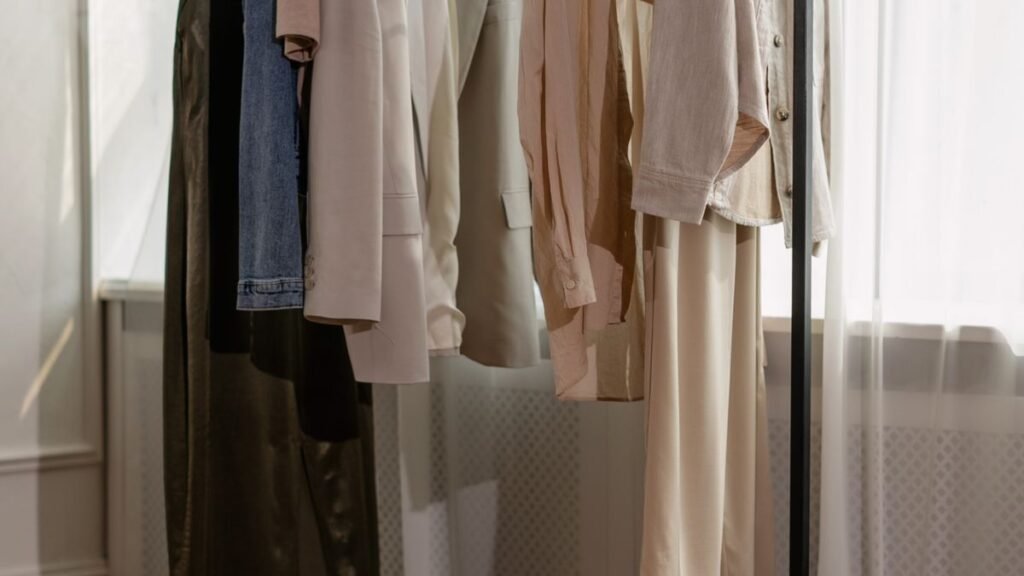
Set aside a couple of hours and do a wardrobe audit. Take everything out and sort it into three piles: wear regularly, wear occasionally, and almost never wear. Then look at the first pile as a set and ask what the pieces have in common. You may regularly choose neutral colours, loose trousers, fitted tops, lightweight fabrics, practical shoes or structured jackets. Note the colours you wear repeatedly, the shapes that make you feel comfortable, the shoes you choose without overthinking, and the fabrics and textures you enjoy wearing. Those patterns are the foundation of your style, whether you have named it or not.
Your least-worn items are just as helpful as your favourites. Ask yourself why you keep avoiding them. Perhaps the fabric feels uncomfortable, the colour is difficult to combine, or the garment does not fit your daily routine. You may also have bought it for an imaginary lifestyle, such as formal events you rarely attend. Do not feel pressured to make every purchase work — sometimes an unworn item simply teaches you what not to buy again. A closet edit like this can also reveal clothes to repair, resell, donate or pack away, and fashion campaigners recommend a closet audit for exactly this reason: to understand what you already own and avoid duplicate purchases.
One useful habit is to record one ordinary week of getting dressed — a quick photo or note each day. At the end of the week, look at the seven outfits together: the repeats will jump out at you, and so will the pieces you thought you loved but never actually wore.
Choose three style words
Once you can see the patterns in your wardrobe, give them a name. Choose three words that describe how you want your outfits to look and feel. For example, your words might be “relaxed, polished, practical” or “bold, creative, comfortable”. These words provide a useful filter when you are creating outfits or considering a purchase: a garment can be attractive but still feel wrong when it does not support the image you want to create.
Avoid vague descriptions such as “nice” or “fashionable”. Choose words that suggest practical clothing decisions. “Structured” may guide you towards blazers, straight trousers and crisp shirts. “Soft” might suggest knitwear, flowing fabrics, comfortable layers and rounded silhouettes. “Practical” points you towards washable fabrics, comfortable shoes and pockets that actually hold things.
Your three words are not permanent rules. They are simply a starting point, and they can change as your lifestyle and preferences evolve. Test them against what you actually wear: if your words say “minimal” but your favourite outfits are all bold prints, trust the wardrobe, not the words.
Collect inspiration without copying
Your saved images are a second source of evidence. Your saves on social media, your screenshot folder, your pinned boards — this is your unconscious mood board. Create a visual reference board using outfits from magazines, films, museum collections, street photography or social media, and save around twenty images without analysing each one immediately. Once you view them together, look for repeated details: similar colour palettes, trouser shapes, necklines, shoes, accessories or methods of layering.
The key is to focus on individual elements instead of copying an entire outfit. You may love a photograph because of its earthy colours rather than the exact coat, or because it balances a loose top with fitted trousers. Fashion has always been connected to culture and identity — museums have documented how figures like Frida Kahlo used clothing and traditional textiles to create a distinctive visual identity — and your own references will come from the culture around you too.
Watch for the gap between what you save and what you wear, because that gap is often where the problem lives. If you save sharp tailored looks but always reach for soft knitwear, the tailored looks are a fantasy, not a direction. Inspiration should help you recognise your taste, not make you feel that everything in your wardrobe is inadequate.
Dress for your real life
Your ideal personal style must work in your actual life, so think honestly about where you spend your time and what your clothing needs to do. Someone working from home may need comfortable separates that still look presentable on video calls; a person who walks or uses public transport may prioritise practical shoes and weather-resistant layers. Climate matters too: translate the mood of your inspiration into lighter fabrics and similar colours where heavy coats would be useless.
Consider how your week is divided. When most of your time is casual, most of your clothes should support casual activities. Special occasions deserve a few suitable outfits, but they should not dominate your wardrobe or your spending. Personal style becomes much easier when it supports your routine instead of competing with it. If you are building a smaller, more deliberate wardrobe around these choices, our guide to a capsule wardrobe shows how to make a limited set of pieces work across a real week — and when a specific occasion calls for a step up in formality, our guide on how to dress for a job interview explains how to read a dress code before you walk in.
Experiment before you shop
You do not need new clothing to test a different style direction. Begin by changing how you combine what you already own. Try tucking in a shirt, changing your shoes, rolling your sleeves, adding a belt, or wearing an accessory you normally save for special occasions. Take photographs of the outfits that work so you can remember and repeat them.
The most useful tool here is an outfit formula: a dependable combination that can be adjusted with different pieces — wide-leg trousers, a fitted top, a lightweight overshirt and simple shoes, for example, or straight jeans, a plain shirt and a structured jacket. The formula stays consistent while the colours, fabrics and accessories change, reducing the time needed to get dressed while creating a recognisable visual pattern.
Change one element at a time. Start with an outfit that already works, then swap a single piece: different shoes, a different layer, a belt instead of none. If the change improves the outfit, keep it; if it does not, you have learned something without spending anything. Pay attention to fit and proportion as you experiment: sometimes an outfit feels wrong because the shoulders are too tight or the trousers are too long, not because the overall style is unsuitable.
Shop with more intention
Once your preferences become clearer, shopping should become slower and more selective. Before buying an item, ask whether it matches your three style words, suits your routine, and works with at least three garments you already own — and consider comfort, fabric, care requirements and durability. A low-priced garment is not a bargain when it remains unworn: cost per wear, the price divided by the number of times you realistically expect to wear it, is a more useful measurement than the price tag alone.
A waiting period helps too. Before buying anything non-essential, wait a few days and see whether you still want it. Photos, wish lists and waiting periods all reduce impulse purchases, and the item that still appeals after a week is far more likely to earn its place. Second-hand shopping, repairs, alterations and clothing swaps can also help you experiment without committing to a new purchase. The aim is not to build a perfect collection. It is to increase the number of clothes you genuinely enjoy using.
Let your style evolve
Personal style is not a final destination. It can change because of a new job, a different climate, a changing body, new responsibilities or growing confidence. Research into how clothing affects the wearer has examined how the symbolic meaning of clothes and the physical experience of wearing them may influence psychological processes — while an outfit cannot change your personality, it may affect how prepared, focused or comfortable you feel in a particular situation.
Review your wardrobe occasionally and notice which preferences have changed. You may begin wearing more colour, choosing softer materials, or moving towards simpler combinations. Outgrowing an old look does not mean you failed to develop a personal style. It means your wardrobe is adapting to the person you are now.
Common questions
How long does it take to find your personal style?
There is no fixed timeline. Most people see clear patterns after a single wardrobe audit and a week of recording what they wear — and the style itself keeps evolving, so think of it as an ongoing habit rather than a project with a finish date.
Do I need to pick one aesthetic, like minimalist or vintage?
No. Your style might be classic, sporty, minimalist, romantic, vintage-inspired or a mixture of several influences. Labels should help you understand your preferences, not limit what you are allowed to wear.
Does personal style cost a lot of money?
It should cost less, not more. Style comes from knowing what suits you and buying less of it, more deliberately — a wardrobe built from clothes you already own, with gaps filled one piece at a time, is both cheaper and more personal than a new one bought in a single trip.
The bottom line
How to find your personal style comes down to paying attention. Your favourite clothes, your ignored purchases, your daily routine, your preferred colours and your most comfortable outfit shapes already contain valuable clues. Begin with a wardrobe audit, select three descriptive style words, and collect inspiration that reflects your real lifestyle. Experiment with different combinations before shopping, then prioritise comfort, fit, versatility and genuine excitement when buying something new.
Open your wardrobe today and select five pieces you love wearing. Write down what they have in common, then use those details to create one new outfit. Your personal style is not hidden somewhere outside you — it is already taking shape through the choices you make.
Sources verified 15 Nov 2026: Fashion Edu — How to Discover Your Personal Style and Build a Wardrobe You Love for the definition of personal style, the wardrobe audit, learning from clothes you avoid, choosing three style words, collecting around twenty inspiration images, dressing for your real lifestyle, experimenting before shopping, outfit formulas, shopping with intention and cost per wear, and allowing style to evolve; Public Storage — How to Find Your Personal Style Without Buying a Whole New Wardrobe for starting from the outfits you wear on repeat, sorting a closet into wear now, repair or tailor, resell or donate, and revisit later, and using photos, wish lists and waiting periods to reduce impulse purchases. No brand ranking is given and no price is stated.