
Introduction
What is thundersnow — this question spikes every time a major winter storm rolls through the Midwest, Northeast, or Great Lakes region, catching residents off guard with a rumble they don’t expect during a snowstorm. Furthermore, as powerful winter storms and lake-effect snow events continue making headlines through 2026, more people are hearing thunder during snowfall and wondering exactly what’s happening overhead. However, thundersnow is a genuinely rare meteorological event, since the atmospheric conditions needed to create thunder and lightning are far less common in winter than in the warm summer months most people associate with thunderstorms. Moreover, understanding how and why thundersnow forms helps explain why it captures so much public fascination whenever it happens. In this article, we cover everything about what thundersnow is, how it forms, and where it happens most. So let us get started!
What Is Thundersnow? The Direct Answer
What Is Thundersnow — A Simple Definition
What is thundersnow, in the simplest terms, is exactly what the name suggests: a winter thunderstorm that produces snow instead of rain. Furthermore, meteorologists define it as an unusual kind of thunderstorm where snow falls as the primary form of precipitation, accompanied by the same thunder and lightning found in a typical summer storm. Moreover, thermodynamically, thundersnow is no different from any other type of thunderstorm, but the top of the storm cloud, known as a cumulonimbus cloud, is usually much lower than in a summer thunderstorm. As a result, thundersnow essentially combines two familiar weather experiences, a snowstorm and a thunderstorm, into one uncommon event.
What Is Thundersnow — Why It’s So Rare
Understanding what is thundersnow also means understanding why it doesn’t happen more often. Furthermore, thunder and lightning require significant atmospheric instability, which in turn requires warm, rising air, a process known as convection — conditions that are abundant in spring and summer but far less common during cold winter months. Moreover, because convection is much rarer in winter, thunderstorms of any kind become uncommon during the same months when snow typically falls, making the combination of thunder and snow together a genuinely unusual occurrence. As a result, thundersnow is generally reserved for only the strongest, most energetic winter storms.
What Is Thundersnow? How It Actually Forms
What Is Thundersnow — The Atmospheric Setup Behind It
The science behind what is thundersnow centers on a specific atmospheric setup. Furthermore, thundersnow typically occurs within the cold sector of a strong low-pressure system, often one that resembles a comma shape on satellite imagery, where winds inside the storm collide with air outside it, forcing air aloft to stretch into that comma-head pattern. Moreover, this process creates a void high in the atmosphere that surface air rushes upward to fill, and that rising motion provides the lift necessary to generate the electrical charge separation that produces lightning, even amid falling snow. As a result, the same fundamental lift mechanism that powers a summer thunderstorm can occur in winter storms strong enough to generate it.
What Is Thundersnow — The Role Of Lake-Effect Snow And Mountains
Beyond large winter storms, two specific settings are especially known for producing what is thundersnow. Furthermore, lake-effect thundersnow occurs after a cold front or upper-level trough passes over a large body of water, such as the Great Lakes or the Great Salt Lake, where the sharp temperature contrast between cold air and relatively warmer water fuels strong upward motion. Moreover, thundersnow can also form over and around mountains through a process called orographic lift, where wind blowing up mountainous terrain provides enough upward force to build cumulonimbus clouds capable of generating lightning. As a result, mountainous regions and areas near the Great Lakes are considered some of the most reliable hotspots for thundersnow in the United States.
Here is a quick overview of the conditions and locations most associated with thundersnow:
FactorDetailsFormation MechanismStrong instability and lift within a winter storm’s cold sectorCommon LocationsGreat Lakes region, Great Salt Lake area, mountainous terrainAssociated StormsNor’easters, bomb cyclones, intense blizzardsCloud TypeLow-topped cumulonimbus cloudsTypical Snowfall RateOften heavy, sometimes 2-3 inches per hour
Furthermore, this table highlights how thundersnow tends to cluster around very specific geographic and meteorological conditions rather than occurring randomly during any snowstorm. As a result, residents in these regions are statistically more likely to experience thundersnow than those elsewhere.
What Is Thundersnow? What It’s Like To Experience
What Is Thundersnow — The Sound And Visual Experience
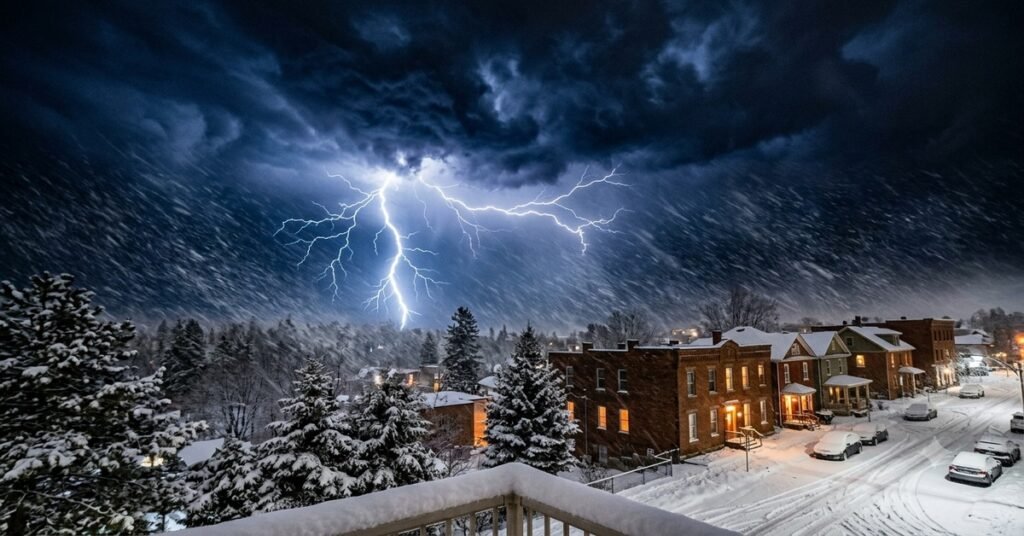
Experiencing what is thundersnow firsthand tends to feel different from a typical thunderstorm. Furthermore, thundersnow is most likely to occur during periods of heavy snowfall, which can make thunder harder for observers on the ground to hear clearly, since falling snow tends to muffle sound more than rain does. Moreover, while the thunder itself may sound softer or more distant than expected, the lightning flash is usually still clearly visible, creating a striking visual contrast against a dark, snow-filled sky. As a result, many people who witness thundersnow describe the lightning as the most memorable and startling part of the experience.
What Is Thundersnow — Is It Dangerous
A common question alongside what is thundersnow is whether it poses any real danger. Furthermore, thundersnow itself indicates that a storm is producing unusually heavy snowfall rates, since intense snow bands are what generate the instability needed for lightning in the first place, meaning thundersnow can serve as a signal of hazardous travel conditions. Moreover, lightning during a thundersnow event carries the same basic risks as summer lightning, including the possibility of a strike, even though the overall likelihood remains lower simply because thundersnow events themselves are rare. As a result, weather officials generally treat thundersnow as both a fascinating phenomenon and a signal to take heavy snowfall and travel warnings seriously.
Frequently Asked Questions (FAQs)
Q1: What is thundersnow? Thundersnow is a rare weather phenomenon that occurs when thunder and lightning happen at the same time as a snowstorm, with snow falling as the primary precipitation instead of rain. Furthermore, it is thermodynamically similar to a regular thunderstorm but occurs with a much lower cloud top. As a result, it combines two normally separate weather experiences into one unusual event.
Q2: Why is thundersnow so rare? Thunder and lightning require significant atmospheric instability driven by warm, rising air, conditions that are common in summer but rare in winter. Furthermore, because convection is limited during cold months, thunderstorms of any kind become uncommon at the same time snow typically falls. As a result, thundersnow only occurs during unusually strong winter storms.
Q3: Where does thundersnow happen most often? Thundersnow is most commonly reported in the Great Lakes region during lake-effect snowstorms, near the Great Salt Lake, and in mountainous areas through orographic lift. Furthermore, it also tends to occur during powerful storm systems like nor’easters and bomb cyclones. As a result, these regions see thundersnow far more frequently than other parts of the country.
Q4: Is thundersnow dangerous? Thundersnow can indicate hazardous conditions, since it typically forms during periods of very heavy snowfall, and the lightning itself carries the same basic risks as summer lightning. Furthermore, heavy snow rates during thundersnow events can significantly reduce visibility and make travel dangerous. As a result, weather officials often use thundersnow reports as a signal to warn the public about worsening travel conditions.
Q5: Why does thunder sound different during thundersnow? Falling snow tends to muffle sound more than rain does, which can make thunder during a thundersnow event sound softer or more distant than usual. Furthermore, the lightning flash typically remains clearly visible despite the muffled thunder. As a result, many witnesses describe thundersnow as more of a visual than an auditory experience.
Q6: What storms are most likely to produce thundersnow? The strongest winter storms, including nor’easters, bomb cyclones, and intense blizzards, are most likely to produce thundersnow. Furthermore, lake-effect snow events near the Great Lakes are also a well-known source. As a result, thundersnow tends to appear specifically during a storm’s most intense snowfall periods.
Conclusion
So what is thundersnow? The answer is a genuinely rare winter weather phenomenon where thunder and lightning occur alongside falling snow, driven by the same atmospheric lift mechanisms found in a summer thunderstorm, just under much colder and less common conditions. Furthermore, thundersnow forms most often within powerful winter storms, lake-effect snow bands near the Great Lakes, and mountainous regions where orographic lift provides the necessary upward motion. Moreover, while the thunder itself may sound muffled by falling snow, the lightning remains a striking and memorable sight, and the phenomenon often signals unusually heavy snowfall rates and hazardous travel conditions. As a result, thundersnow remains one of winter’s most fascinating and closely watched weather events whenever a strong enough storm rolls through.
Stay tuned to WorldForbes for the latest weather explainers, storm coverage, and winter safety guides in 2026.
Pingback: Newborn Giggles In Sleep: Everything You Need To Know in 2026 - WorldForbes