
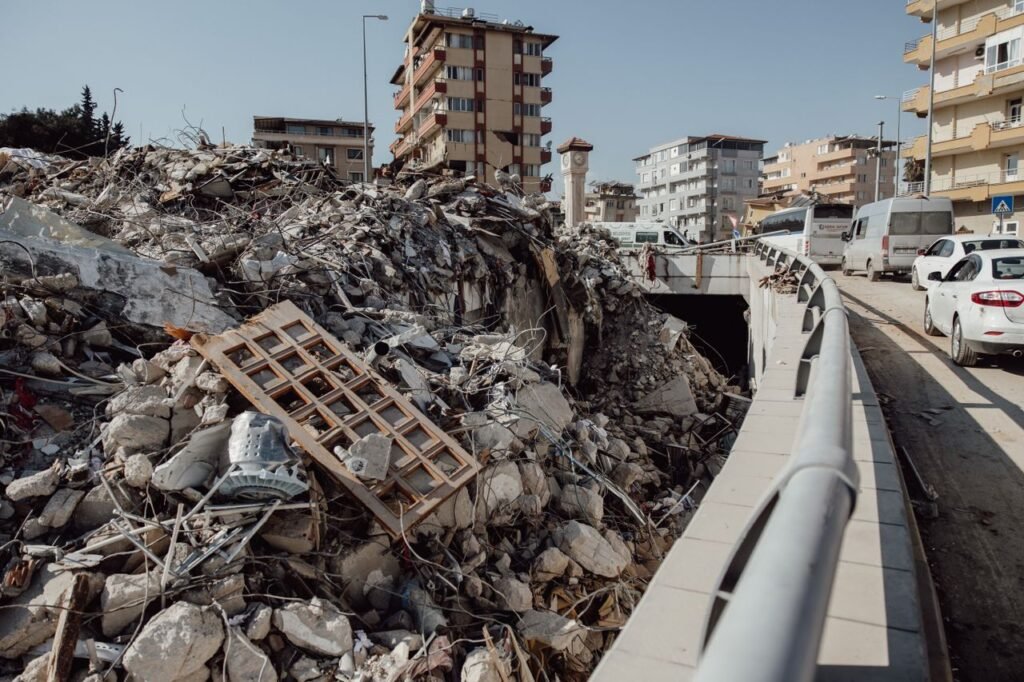
Earthquakes give no warning. There is no siren, no forecast and no season: the ground can start shaking at any moment, and the shaking itself usually lasts less than a minute. What decides whether you are hurt is rarely the strength of the quake. It is whether you knew what to do, whether heavy things were secured, and whether you had supplies ready. This guide follows the official advice of Ready.gov, the US Geological Survey and the Red Cross. It is an evergreen preparedness guide, not a report on any earthquake happening today: no earthquake warning is in force for our readers, and the steps below are the same ones to take before any quake.
What an earthquake is, and why it cannot be predicted
An earthquake is a sudden, rapid shaking of the earth caused by shifting rock underground. The Red Cross puts the key fact first: there is no way to predict an earthquake. Scientists can map where quakes are more likely, and they can measure them the moment they happen, but nobody can say when the next one will strike a particular town. That is why preparation matters more than prediction. Earthquakes can happen anywhere, although some regions are far more prone than others, and they can cause tsunamis, landslides and fires as well as shaking.
Most deaths and injuries in an earthquake do not come from the ground itself. They happen when people fall while trying to walk or run during the shaking, or when they are hit by falling debris. Your job during an earthquake is simple: stay where you are, protect your head and neck, and wait for the shaking to stop.
Secure your home before anything happens
Start with a walk through your home, room by room, imagining the room shaking. Anything that could fall and hurt you needs to be secured or moved. The Red Cross checklist names the usual suspects: televisions, shelves, mirrors, pictures, water heaters, refrigerators and bookcases. Bolt and brace tall and heavy items such as bookcases and water heaters to wall studs. Store heavy items on low shelves or in low cupboards, and install strong latches or bolts on cabinets so the contents stay inside. Do not hang heavy pictures or mirrors near beds, couches or anywhere people sleep or sit.
Ask a professional to check whether your home is securely anchored to its foundation, and whether flexible fittings should be fitted to gas appliances. If you live in a quake-prone area, get your building evaluated. Pick safe places in each room: under a sturdy table or desk, or against an interior wall away from windows, bookcases and tall furniture. Keep a torch and a pair of sturdy shoes by each person’s bed, because after a quake there may be broken glass and debris on the floor, and the power may be out. Learn how to turn off your utilities, and learn first aid and CPR.
Make a plan and pack a kit
Agree on a family emergency plan before you need one: where to meet if you are separated, how to contact each other if mobile networks fail, and what each person should do when the shaking starts. Review and practise the plan for every building you spend time in regularly: home, work and school. The Red Cross advises practising Drop, Cover and Hold On in each safe place you have picked.
Then pack supplies. The Red Cross recommends a go-kit with at least three days of supplies that you can carry with you, and a stay-at-home kit with at least two weeks of supplies. The basics are water, one gallon per person per day, non-perishable food, a first aid kit, a torch and extra batteries, medicines, copies of important documents, a phone charger, and cash in small notes. Keep the go-kit somewhere you can reach it quickly, and check it twice a year, replacing expired food, water and medicines.
During an earthquake: Drop, Cover and Hold On
When the shaking starts, protect yourself right away. The method every major agency teaches is the same: Drop, Cover and Hold On. Drop where you are, onto your hands and knees: this keeps you from being knocked over and lets you crawl. Cover your head and neck with one arm and hand. If a sturdy table or desk is nearby, crawl underneath it for shelter; if no shelter is nearby, crawl next to an interior wall, away from windows. Stay on your knees and bend over to protect your vital organs. Hold On until the shaking stops: if you are under shelter, hold on with one hand and be ready to move with it if the furniture moves; if you are not under shelter, hold on to your head and neck with both arms.
Do not run outside: most injuries happen when people try to leave a building during the shaking and are hit by falling debris. Do not stand in a doorway: in modern homes, doorways are no stronger than any other part of the house, and the door itself can swing and injure you. The US Geological Survey is blunt about this: you are safer practising Drop, Cover and Hold On under a sturdy piece of furniture. Practise the method at home and at work at least twice a year, so it becomes automatic.
If you are not at home when it happens
The same three steps apply wherever you are, with small adjustments. If you are in bed, stay there: turn face down and cover your head and neck with a pillow. If you are outside, move to an open area away from buildings, trees, streetlights and power lines, then drop and cover until the shaking stops. If you are driving, pull over to the side of the road and stop, avoiding overpasses, bridges and power lines, and stay inside your car until the shaking is over. If you are in a high-rise building, stay away from windows and outside walls, get under a table, and do not use the lifts. If you are in a crowded public place, do not rush for the doors: crouch and cover your head and neck with your hands and arms.
People with mobility aids should adapt the method rather than abandon it. If you use a wheelchair or a walker with a seat, lock the wheels and remain seated until the shaking stops, covering your head and neck with your arms. If you use a cane, drop, cover and hold on, or sit on a chair or bed and cover your head and neck with both hands. If you are near the coast and the shaking is strong or lasts a long time, be aware of a possible tsunami: the Canadian Red Cross advises that if an earthquake lasts for more than 20 seconds, a tsunami may follow, so move to high ground once the shaking stops.
After the shaking stops
The danger is not over when the ground stops moving. Expect aftershocks: smaller quakes that always follow the main shock, and that can occur minutes, days, weeks or even months afterwards. Each time you feel one, Drop, Cover and Hold On again. Wait a minute before getting up, and put on sturdy shoes before you move: broken glass and debris are everywhere after a strong quake.
Check yourself and others for injuries. Look quickly for damage and get everyone out if the building is unsafe, then stay out of damaged buildings. Fire is the most common hazard after an earthquake, so look for and extinguish small fires if it is safe to do so. If you smell gas or hear a hissing noise, leave immediately and call the fire department, and never turn the gas back on yourself: only a qualified professional should do that. Expect further hazards: aftershocks, landslides and, on the coast, tsunamis. Return home only when the authorities say it is safe, and use the stairs, never the lift, when leaving a building. Once you are safe, review your family emergency plan and restock your kit.
Common questions
Can scientists predict earthquakes? No. There is no way to predict when an earthquake will happen. What scientists can do is map the risk, measure quakes as they happen, and, in some places, give a few seconds of warning once shaking has been detected nearby. Preparation is the only reliable protection.
Should I stand in a doorway during an earthquake? No. That advice dates from a time when door frames in unreinforced masonry buildings were sometimes the only thing left standing. In modern homes, doorways are no stronger than any other part of the house, and doors can swing and injure you. Get under a sturdy table instead.
Is it safe to run outside? No. Stay inside until the shaking stops. Most injuries happen when people try to run out through falling debris. The exception is if you are already outside: then stay there, in an open area away from buildings and power lines.
What is the “triangle of life”? It is advice that has circulated by email for years, recommending people shelter beside furniture rather than under it. Leading experts have discredited it. The method taught by Ready.gov, the US Geological Survey and the Red Cross is Drop, Cover and Hold On.
How long should my supplies last? The Red Cross recommends a go-kit with at least three days of supplies you can carry, and a stay-at-home kit with at least two weeks of supplies. In a large disaster, officials cannot reach everyone immediately, so self-sufficiency matters.
The bottom line
You cannot predict an earthquake or stop one. What you can do is prepare: secure the heavy things, pick safe places in every room, pack a kit, and practise Drop, Cover and Hold On at least twice a year. When the shaking starts, stay where you are, get under something sturdy, protect your head and neck, and hold on until it stops. Afterward, expect aftershocks, check for damage and gas leaks, and stay out of damaged buildings. For other severe weather, our guide to how to prepare for a hurricane covers storm preparation, and our guide to how to prepare for a power outage covers staying safe when the lights go out.
Sources verified 14 Nov 2026: Ready.gov — Earthquakes — Drop onto hands and knees; Cover head and neck, crawl under a sturdy table or desk or next to an interior wall away from windows; Hold On until shaking stops; in bed, turn face down and cover head and neck with a pillow; outside, move to an open area away from buildings, trees, streetlights and power lines; practise with family and coworkers; expect aftershocks and Drop, Cover and Hold On again; cane users should sit and cover head and neck with both hands; US Geological Survey — Earthquake Facts and Earthquake Fantasy — doorways no stronger than any other part of a modern home, doors can swing and injure; practise Drop, Cover and Hold On at work and at home at least twice a year; if driving, pull over, avoid overpasses and power lines, stay in the car; high-rise, stay away from windows and outside walls, no lifts; crowded place, do not rush for doors; American Red Cross — Earthquake Preparedness Checklist — no way to predict an earthquake; deaths and injuries occur when people fall trying to walk or run during shaking or when hit by falling debris; aftershocks always follow the mainshock; earthquakes can cause tsunamis; go-kit at least three days of supplies, stay-at-home kit at least two weeks; secure televisions, shelves, mirrors, pictures, water heaters, refrigerators and bookcases; Canadian Red Cross — Earthquake Ready — fire the most common hazard after an earthquake; earthquake lasting more than 20 seconds near the coast may generate a tsunami; do not get in a doorway; do not run outside; triangle-of-life advice discredited by leading experts; wheelchair users lock wheels and remain seated. No earthquake warning was in force for readers today; the largest quake in the past 24 hours was magnitude 5.8 in Peru on 13 November, and no tsunami warning was in effect for Hawaii as of this morning. No figure was taken from memory.