
Introduction
Parking near a fire hydrant might seem like a minor inconvenience to the driver who does it — but to a firefighter arriving at a blaze with seconds to spare, a blocked hydrant can mean the difference between saving a building and watching it burn.
Livermore, California takes fire hydrant parking very seriously. The city is in the heart of the Tri-Valley region — an area that saw multiple significant fires in 2026, including the Little Fire in July that triggered evacuations in the Ruby Hills area and a dramatic five-alarm barn fire in May that sent fireballs into the sky and destroyed 30 years of a family’s collectibles. In this environment, keeping fire hydrants clear is not a bureaucratic rule. It is a genuine public safety imperative.
This complete guide covers everything you need to know about Livermore’s fire hydrant parking rules, clearance requirements, fines, and hydrant identification system.
Livermore Parking Fire Hydrant: The Basic Rule
California Law on Hydrant Parking
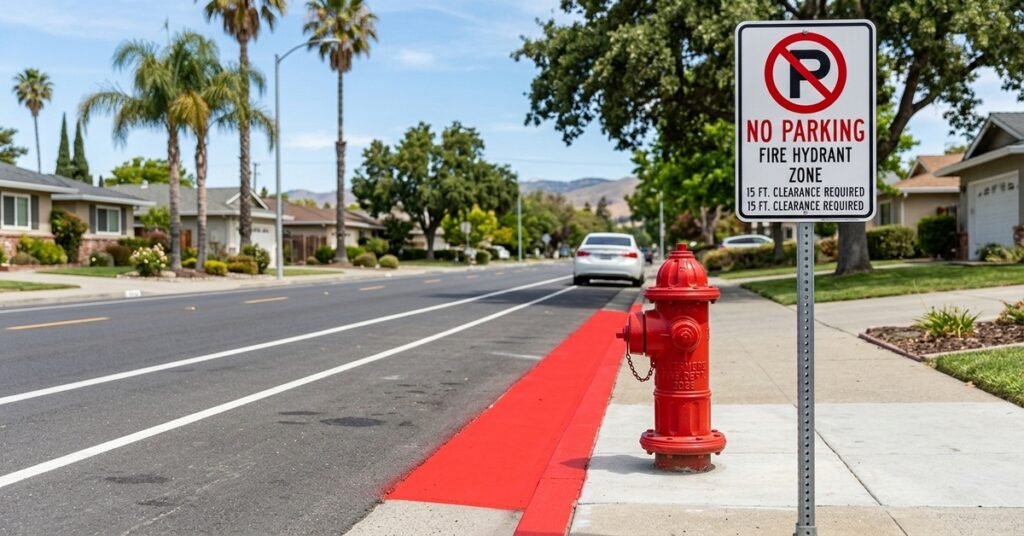
The starting point for any discussion of fire hydrant parking in Livermore is California state law. California Vehicle Code Section 22514 is explicit and unambiguous. No person shall stop, park, or leave standing any vehicle within 15 feet of a fire hydrant — except if the vehicle is attended by a licensed driver who is seated in the front seat and who can immediately move the vehicle in case of necessity.
The 15-foot rule applies regardless of whether the curb near the hydrant is painted red. Livermore Police have specifically noted that the curb near the hydrant does not need to be painted red for a parking violation to occur. Many drivers mistakenly believe that if they do not see red paint, they are free to park. They are not.
The Fine in Livermore
The fine for parking near a fire hydrant in Livermore is $70. This is a civil penalty issued directly to the registered owner of the vehicle — not just the driver at the time of the violation. The fine is consistent with California’s statewide parking enforcement structure and reflects the seriousness with which the state treats obstruction of fire safety infrastructure.
Here are the key rules at a glance:
| Rule | Requirement |
|---|---|
| Minimum Distance | 15 feet from any fire hydrant |
| Red Curb Required? | No — 15-foot rule applies regardless |
| Exception | Licensed driver seated in front seat ready to move immediately |
| Fine in Livermore | $70 |
| Legal Authority | California Vehicle Code Section 22514 |
| Clearance Around Hydrant | Minimum 3-foot clear space on all sides |
| Vegetation Clearance | 36-inch minimum clear space from vegetation and shrubs |
Livermore Parking Fire Hydrant: Understanding Hydrant Colors
Three Colors — Three Different Owners
One of the most distinctive aspects of Livermore’s fire hydrant system is the use of color coding to identify hydrant ownership. Unlike many cities that use a single color for all hydrants, Livermore has three different hydrant colors — each indicating a different owner and water supply system.
Here is what the colors mean:
| Hydrant Color | Owner | Location |
|---|---|---|
| Red | California Water Service (CalWater) | Adjacent to public streets or sidewalks |
| Yellow | City of Livermore | City-owned infrastructure |
| Purple | Recycled water supply | Specific locations throughout city |
Understanding which color hydrant you are parking near does not affect the parking rules — the 15-foot rule applies to all hydrants regardless of color. However, this color coding system is important for firefighters who need to quickly identify the water supply available at any given hydrant during an emergency.
CalWater’s New Fire Hydrants in Downtown Livermore
An important infrastructure upgrade for Livermore’s fire protection system was announced earlier in 2026. California Water Service — the provider of the red-marked hydrants throughout Livermore — completed installation of three new fire hydrants as part of a larger infrastructure project.
The project involved installing 855 feet of new 8-inch water main and three new fire hydrants in downtown Livermore along Railroad Avenue between First Street and P Street. The new main replaces a section of pipe installed in 1949 and is expected to last at least 100 years. CalWater District Manager John Freeman described the project as a testament to their proactive approach of providing a reliable supply of safe, clean water to customers in Livermore for generations to come.
This kind of infrastructure investment directly improves fire protection capacity in the areas around the new hydrants — making the maintenance of clear access to those hydrants even more important.
Livermore Parking Fire Hydrant: The Full Clearance Requirements
More Than Just Parking Distance
The 15-foot vehicle parking rule is just one aspect of Livermore’s fire hydrant clearance requirements. The Livermore-Pleasanton Fire Department has published comprehensive guidelines covering all aspects of hydrant access and clearance. These requirements apply to property owners, developers, and anyone installing structures, vegetation, or other items near hydrants.
Here is a complete overview of the clearance requirements that apply in Livermore:
| Requirement | Standard |
|---|---|
| Vehicle Parking Distance | Minimum 15 feet |
| Clear Space Around Hydrant | Minimum 3 feet on all sides |
| Vegetation and Shrub Clearance | Minimum 36 inches |
| Gate and Fence Restriction | No obstruction without LPFD approval |
| Bollard Restriction | Must not obstruct hydrant valves per City Detail W-12 |
| FDC Access Width | Minimum 36 inches wide |
| FDC Access Depth | Minimum 36 inches deep |
| FDC Access Height | Minimum 78 inches tall |
The requirement that hydrants not be obstructed by gates, fences, or other items without approval of both the Livermore-Pleasanton Fire Department and the hydrant owner is particularly important for property owners doing landscaping or adding structures near hydrants. Property owners who need to install gates near hydrants may be required to purchase an approved LPFD padlock to ensure fire department access is maintained.
Fire Department Connection Visibility
One detail that property owners and developers often miss is the requirement regarding Fire Department Connections — the fittings that allow fire engines to pump additional water into a building’s fire suppression system. These connections must remain visible and must not be screened from view. City of Livermore Standard Detail W-10A requires that FDC connections remain visible and that a minimum 36-inch clear space be maintained from the backflow preventer assembly.
Livermore Parking Fire Hydrant: Why It Matters — The 2026 Fire Context
Livermore’s Active Fire Season
Understanding why fire hydrant access rules are taken so seriously in Livermore requires understanding the fire risk environment that the city operates in. The Tri-Valley region of the San Francisco Bay Area — where Livermore is located — faces significant wildfire risk, particularly during the dry summer and fall months.
In 2026, this risk became very real on multiple occasions:
May 27, 2026 — Tesla Road Barn Fire: A massive fire near Livermore burned through brush and multiple outbuildings in the area of Tesla and Cross Roads. Two barns were burned — one fully and one partially. Vehicles, propane tanks, and welding equipment stored inside triggered multiple explosions — including a dramatic fireball visible from miles away. A family lost 30 years worth of collectibles including Disney items and a wedding dress. No injuries were reported, but firefighters battled the blaze for approximately five hours before bringing it under control.
July 21, 2026 — Little Fire: A fire burning outside the City of Livermore in the Sunol and Pleasanton area prompted CAL FIRE to issue mandatory evacuation orders for the Ruby Hills area. Livermore Police deployed officers to assist with evacuations and work alongside CAL FIRE and regional public safety partners. The fire was monitored closely for its potential impact on the city.
These real-world incidents illustrate why Livermore’s fire hydrant access rules are not theoretical bureaucratic requirements. When a fire breaks out — and fires break out regularly in this part of California — firefighters need to access water immediately. A car parked within 15 feet of a hydrant can cost precious seconds that mean the difference between containment and catastrophe.
What Happens When Hydrants Are Blocked
When fire crews arrive at a structure fire and find that the nearest hydrant is blocked by a parked vehicle, they have several options — none of them good. They can break a window of the blocking vehicle and run the hose directly through the car. They can locate the next nearest hydrant — which may be significantly further away. Or they can wait while the blocking vehicle is towed — losing precious minutes in the process.
In California, fire departments have the legal authority to break the windows of vehicles blocking fire hydrants in emergency situations. The cost of replacing those windows falls entirely on the vehicle owner. Combined with the towing costs and the $70 parking fine, parking near a fire hydrant can become a very expensive mistake very quickly.
Livermore Parking Fire Hydrant: Practical Guidance
How to Measure 15 Feet
Many drivers are unsure how to estimate 15 feet from a fire hydrant. Here are some practical reference points:
- The average car is approximately 14 to 16 feet long — so parking approximately one car length from the hydrant is roughly right
- The distance is measured from the front or rear of your vehicle to the nearest point of the hydrant — not to the center
- When in doubt, park further away — the fine is not worth the risk
What the Exception Means
California law includes one exception to the 15-foot rule — a licensed driver who is seated in the front seat and can immediately move the vehicle in case of necessity. This is a narrow exception. The driver must actually be in the front seat — not standing nearby or sitting in the back. And the ability to move immediately means the engine should be running or the driver must be able to start and move the vehicle in seconds. Sitting in a parked car reading your phone while someone runs an errand does not necessarily qualify as being ready to move immediately.
Property Owner Responsibilities
Property owners have responsibilities beyond just how they park their own vehicles. If your landscaping, fence, or other property installation obstructs access to a fire hydrant, you may be required by the Livermore-Pleasanton Fire Department to make changes at your own expense. Before installing any fence, gate, or significant landscaping within the vicinity of a fire hydrant, consult with the LPFD to ensure compliance with all clearance requirements.
Frequently Asked Questions (FAQs)
Q1: How far must you park from a fire hydrant in Livermore? California law requires a minimum of 15 feet from any fire hydrant. This applies regardless of whether the curb is painted red. The fine for violating this rule in Livermore is $70. As a result, always ensure you are at least 15 feet away from any hydrant before leaving your vehicle.
Q2: Does the curb need to be painted red for the rule to apply? No. Livermore Police have specifically stated that the curb near the hydrant does not need to be painted red for a parking violation to occur. The 15-foot rule under California Vehicle Code Section 22514 applies to all fire hydrants regardless of curb color. As a result, the absence of red paint is not a defense against a parking citation.
Q3: What do the different hydrant colors mean in Livermore? Red hydrants belong to California Water Service and are located adjacent to public streets. Yellow hydrants are city-owned. Purple hydrants are part of the recycled water supply system. As a result, the color helps firefighters quickly identify the water supply source — but all hydrants are subject to the same 15-foot parking restriction.
Q4: What happens if you park in front of a fire hydrant during a fire? Firefighters have the legal authority to break the windows of vehicles blocking fire hydrants during emergencies and run hoses through the car. The vehicle owner is responsible for all damage. Combined with towing costs and the $70 parking fine, blocking a hydrant during a fire can become extremely expensive. As a result, the risks of this parking violation far outweigh any convenience.
Q5: What clearance must be maintained around a fire hydrant? Beyond the 15-foot vehicle parking rule, a minimum 3-foot clear space must be maintained around all sides of the hydrant. Vegetation must be kept at least 36 inches away. Gates and fences cannot obstruct hydrant access without approval from both the LPFD and the hydrant owner. As a result, property owners near hydrants have significant maintenance responsibilities.
Q6: Is there any exception to the fire hydrant parking rule? Yes. A vehicle may park within 15 feet of a hydrant if a licensed driver is seated in the front seat and can immediately move the vehicle if necessary. This is a narrow exception — the driver must genuinely be ready to move the vehicle immediately. As a result, this exception should not be relied upon for anything other than the briefest of stops.
Q7: What infrastructure improvements have been made to Livermore’s hydrants in 2026? CalWater installed three new fire hydrants in downtown Livermore in early 2026 as part of a project that also replaced 855 feet of water main originally installed in 1949. The new infrastructure is expected to last at least 100 years and improves water supply reliability and fire protection in downtown Livermore. As a result, these new hydrants further underline the importance of maintaining proper clearance around all hydrants in the city.
Conclusion
Fire hydrant parking rules in Livermore are simple, clear, and rigorously enforced — and for good reason. In a region that saw multiple significant fires in 2026, from the dramatic Tesla Road barn fire in May to the Little Fire evacuation in July, the difference between a fire hydrant that firefighters can access immediately and one blocked by a carelessly parked car can have enormous consequences.
The rules are straightforward. Stay 15 feet away. The curb does not need to be red. Keep vegetation and structures clear. And if you are a property owner near a hydrant, maintain the access the fire department needs to protect your home and your neighborhood.
A $70 fine is the least of your worries if you block a hydrant and a fire breaks out nearby. Keeping Livermore’s hydrants clear is a shared responsibility — and one that every resident and visitor to the city should take seriously.
Stay tuned to WorldForbes for the latest local news, public safety guides, and California updates throughout 2026.