
Introduction
Plant Paper toilet paper — why is everyone suddenly switching from their regular brand to this bamboo alternative? Millions of eco-conscious consumers are searching for the full story in 2026. Furthermore, Plant Paper has emerged as one of the most talked-about personal care brands in America — promising a toilet paper that is free from PFAS forever chemicals, formaldehyde, chlorine bleach, and other potentially harmful substances found in conventional toilet paper. However, with a price point higher than most mainstream brands, the obvious question is whether Plant Paper toilet paper is actually worth it. Moreover, the brand received significant attention in 2026 after being ranked the number one non-toxic toilet paper by R3 Research with a perfect 10 out of 10 safety score — and after a National Advertising Division review that required the company to modify some of its health and environmental marketing claims. As a result, Plant Paper toilet paper is one of the most important and widely discussed sustainable household products of 2026. In this article, we cover everything about Plant Paper toilet paper and exactly what you need to know before buying. So let us get started!
Plant Paper Toilet Paper? The Direct Answer
Plant Paper Toilet Paper — What It Actually Is
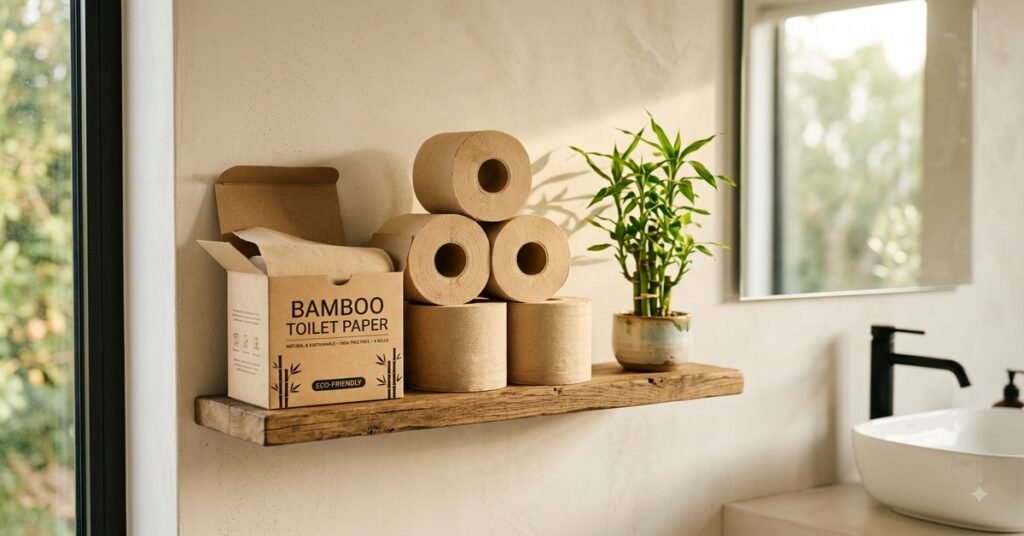
Plant Paper toilet paper is a bamboo-based, tree-free toilet tissue made without chlorine bleach, PFAS, formaldehyde, fragrance, dyes, or other chemical additives commonly found in conventional toilet paper. Furthermore, the product is manufactured by Plant Paper Inc., a U.S.-based company focused on creating non-toxic, sustainable household paper products — including toilet paper, paper towels, and facial tissues. Moreover, unlike most conventional toilet paper which is made from virgin tree pulp and processed with chlorine bleach to achieve a bright white color, Plant Paper uses bamboo as its primary raw material and foregoes bleaching entirely — giving the product its distinctive natural tan or beige color. As a result, Plant Paper toilet paper delivers a completely different raw material story from any conventional brand on the market.
Plant Paper Toilet Paper — Why People Are Switching
Plant Paper toilet paper is attracting consumers for two main reasons — health concerns and environmental concerns. Furthermore, multiple independent studies have detected PFAS — so-called forever chemicals — in conventional toilet paper brands, raising concerns about daily exposure through a product used in one of the most sensitive areas of the body. Moreover, bamboo grows dramatically faster than trees — reaching harvest maturity in three to five years compared to decades for the softwood trees used in conventional toilet paper — making it a significantly more renewable raw material. As a result, Plant Paper toilet paper appeals to two overlapping consumer groups: those worried about chemical exposure and those worried about environmental impact.
Plant Paper Toilet Paper? What Makes It Different
Plant Paper Toilet Paper — No PFAS or Forever Chemicals
The most significant health claim behind Plant Paper toilet paper is its freedom from PFAS. Furthermore, PFAS — per- and polyfluoroalkyl substances — are a family of thousands of synthetic chemicals that have been detected in everything from non-stick cookware to food packaging to toilet paper, and that have been linked in research to thyroid disruption, immune system effects, and increased cancer risk. Moreover, a 2023 peer-reviewed study and subsequent consumer advocacy investigations found detectable levels of PFAS in multiple major conventional toilet paper brands — a finding that drove significant consumer concern about a product used multiple times daily. As a result, Plant Paper toilet paper’s position as a PFAS-free alternative addresses one of the most concrete and specific health concerns that has been raised about conventional toilet paper in recent years.
Plant Paper Toilet Paper — No Chlorine Bleaching
Plant Paper toilet paper also stands apart from conventional brands in its manufacturing process. Furthermore, conventional toilet paper is typically treated with chlorine or chlorine compounds during the bleaching process — which creates the bright white color most consumers associate with cleanliness but also generates chemical byproducts including dioxins and furans, some of which have been classified as potential carcinogens. Moreover, Plant Paper skips the bleaching process entirely — resulting in the characteristic natural tan color that appears in the toilet bowl and that some consumers find surprising at first but quickly come to accept as evidence of the product’s chemical-free processing. As a result, the absence of chlorine bleaching is one of the most meaningful process-level differences between Plant Paper toilet paper and conventional alternatives.
Plant Paper Toilet Paper — The Bamboo Advantage
The Plant Paper toilet paper raw material choice is central to its environmental claims. Furthermore, bamboo is one of the fastest-growing plants on earth — some species grow up to three feet per day — and reaches harvest maturity in three to five years compared to the 10 to 30 years required for the softwood trees typically used in conventional toilet paper. Moreover, bamboo can be harvested repeatedly without replanting, since the root system remains intact and regenerates after cutting — unlike trees which must be replanted after harvesting. As a result, bamboo offers a significantly more renewable raw material profile than tree pulp — though it is worth noting that the National Advertising Division recommended in November 2025 that Plant Paper modify some of its comparative environmental claims after a challenge from the American Forest and Paper Association.
Here is a quick comparison of Plant Paper toilet paper versus conventional toilet paper:
| Feature | Plant Paper | Conventional TP |
|---|---|---|
| Raw material | Bamboo | Tree pulp |
| Bleaching | None — natural tan color | Chlorine or chlorine compounds |
| PFAS | Free of PFAS | Detected in multiple major brands |
| Formaldehyde | Free | Present in some brands |
| Fragrance/dyes | None | Often added |
| Packaging | Plastic-free | Typically plastic wrapped |
| Color | Natural tan/beige | Bright white |
| Subscription available | Yes | Typically not |
| Price per roll (approx) | Higher than conventional | Lower |
| R3 Safety Score 2026 | 10/10 — #1 ranked | Varies |
Furthermore, this comparison shows exactly where Plant Paper toilet paper differs from conventional alternatives across every major dimension. As a result, consumers can make a fully informed comparison based on the specific factors that matter most to them.
Plant Paper Toilet Paper? How Does It Actually Feel
Plant Paper Toilet Paper — Softness and Texture
The question most people have about Plant Paper toilet paper is simple — how does it actually feel? Furthermore, reviews are genuinely polarized on this point — with many consumers describing the product as surprisingly soft, strong, and lint-free, while others find it rougher than the ultra-plush three-ply conventional brands they are used to. Moreover, the brand itself describes its texture as having a smooth side and a grippy side — giving users two different tactile experiences depending on how the roll is oriented. As a result, the honest answer is that Plant Paper toilet paper feels different from the typical ultra-soft conventional experience — and whether that difference is acceptable or preferable depends heavily on individual sensitivity and expectations.
Plant Paper Toilet Paper — Strength and Durability
Plant Paper toilet paper consistently earns strong marks from reviewers on strength and durability. Furthermore, multiple verified buyer reviews describe the product as strong enough that sheets do not tear unexpectedly during use — a concern with some thinner eco-friendly toilet papers. Moreover, the brand claims its paper towel products can be used, rinsed out, and reused up to five times — and while toilet paper is by definition a single-use product, the same bamboo fiber strength carries through to the toilet paper line. As a result, the durability of Plant Paper toilet paper is one of its most consistently praised attributes across review platforms.
Plant Paper Toilet Paper — Flushability
Plant Paper toilet paper is described by the brand as septic safe and fully flushable. Furthermore, bamboo fibers break down quickly in water — making Plant Paper toilet paper compatible with standard septic systems and plumbing without the clogging risk that some thick conventional papers or so-called “flushable” wipes can create. Moreover, multiple user reviews specifically note that the product flushes cleanly and that the natural tan color in the bowl — initially surprising to some first-time users — quickly becomes unremarkable. As a result, flushability is not a concern with Plant Paper toilet paper in standard residential plumbing.
Plant Paper Toilet Paper? Pricing and Where To Buy
Plant Paper Toilet Paper — How Much It Costs
Plant Paper toilet paper is priced at a premium compared to conventional brands. Furthermore, a standard bundle of Plant Paper toilet paper is priced at approximately $69 for a larger supply — though the brand offers subscription pricing that reduces the per-roll cost for recurring customers. Moreover, the brand argues that the per-use cost is more comparable to conventional brands than the upfront price suggests — because the strength and density of the bamboo fiber means consumers typically use fewer sheets per use than with thinner conventional papers. As a result, while the upfront cost is higher, the cost-per-use comparison may be closer than the sticker price alone implies.
Plant Paper Toilet Paper — Where To Buy
Plant Paper toilet paper is primarily sold through the company’s own website at plantpaper.us. Furthermore, the brand offers both one-time purchases and a subscription model that automatically delivers new rolls on a schedule determined by the customer — eliminating the need to remember to restock. Moreover, the brand’s plastic-free packaging — using kraft paper and cardboard rather than plastic film — is a distinctive feature of the delivery experience that many customers specifically cite as part of their decision to subscribe. As a result, for consumers who want to try Plant Paper toilet paper, the official website is the most direct and reliable purchasing channel.
Frequently Asked Questions (FAQs)
Q1: What is Plant Paper toilet paper made from? Plant Paper toilet paper is made from bamboo — a fast-growing, renewable plant material that reaches harvest maturity in three to five years. Furthermore, it contains no tree pulp, no chlorine bleach, no PFAS, no formaldehyde, and no added fragrances or dyes. As a result, its raw material and manufacturing process are fundamentally different from conventional toilet paper.
Q2: Is Plant Paper toilet paper really toxin-free? Plant Paper is designed to be free from PFAS, formaldehyde, chlorine bleach, fragrances, and dyes. Furthermore, R3 Research awarded it a perfect 10 out of 10 safety score in 2026, naming it the best non-toxic toilet paper on the market. As a result, it stands out as one of the most independently validated non-toxic options currently available.
Q3: Does Plant Paper toilet paper feel soft? Reviews are mixed — many users describe it as soft, strong, and surprisingly luxurious, while others find it firmer than ultra-plush conventional three-ply papers. Furthermore, the texture has both a smooth side and a slightly grippy side. As a result, it feels different from the typical ultra-soft conventional experience — and individual sensitivity will determine whether that difference is acceptable or preferable.
Q4: Why is Plant Paper toilet paper a tan color? The natural tan color comes from the absence of chlorine bleaching — conventional toilet paper is bright white because it has been chemically bleached. Furthermore, Plant Paper skips bleaching entirely, which preserves the natural color of the bamboo fiber. As a result, the tan color is evidence of the product’s chemical-free processing, not a defect.
Q5: Is Plant Paper toilet paper worth the price? Whether Plant Paper is worth the premium depends on what you value. Furthermore, if avoiding PFAS, formaldehyde, and chlorine bleach in a daily personal care product is a priority — and if environmental sustainability matters to you — Plant Paper delivers on those specific promises more credibly than most alternatives. As a result, for consumers whose primary criteria are safety and sustainability, the premium is justified by the product’s performance on those dimensions.
Q6: Did Plant Paper face any regulatory or advertising challenges? Yes. In November 2025, the National Advertising Division recommended that Plant Paper discontinue or modify certain comparative health and environmental claims after a challenge from the American Forest and Paper Association. Furthermore, Plant Paper voluntarily discontinued some of the challenged toilet paper claims during the proceeding. As a result, consumers should evaluate Plant Paper’s marketing with awareness that some of its stronger comparative claims have been independently reviewed and modified.
Conclusion
So is Plant Paper toilet paper worth it in 2026? The answer depends on what you are looking for. Furthermore, Plant Paper toilet paper is a bamboo-based, PFAS-free, unbleached toilet tissue that has earned a perfect 10 out of 10 safety score from R3 Research and consistently strong reviews from health-conscious and eco-conscious consumers who prioritize knowing exactly what is in their daily personal care products. Moreover, it comes at a premium price compared to conventional brands, delivers a different texture experience that most users adjust to positively over time, and ships in plastic-free packaging on a convenient subscription model. As a result, Plant Paper toilet paper is not for every buyer — but for the growing segment of American consumers who are thinking carefully about chemical exposure and environmental sustainability in their household purchasing decisions, it is one of the most credible and well-reviewed options available in 2026.
Stay tuned to WorldForbes for the latest product reviews, health guides, and sustainable living news in 2026.
Pingback: Total Solar Eclipse August 12 2026: Where To Watch, Times, and Everything You Need To Know - WorldForbes
Pingback: Things To Do In Belize: Everything You Need To Know in 2026 - WorldForbes